Introduction of 216A IPC
I216A IPC punishes anyone who helps robbers or dacoits by giving them shelter or protecting them from arrest. The law ensures that criminals do not get support from others while committing crimes or escaping justice.
- Introduction of 216A IPC
- What is IPC Section 216A ?
- IPC 216A in Simple Points
- Section 216A IPC Overview
- 10 Key Points of IPC 216A
- 1️⃣ What is Harbouring?
- 2️⃣ Applies to Both Planned and Committed Crimes
- 3️⃣ Crime Can Be Inside or Outside India
- 4️⃣ Strict Punishment to Stop Criminal Support
- 5️⃣ Different Ways of Harbouring Criminals
- 6️⃣ IPC 216A is a Non-Bailable Offense
- 7️⃣ IPC 216A is a Cognizable Offense
- 8️⃣ Trial is Conducted by a Sessions Court
- 9️⃣ No Protection for Friends and Family (Except Spouse)
- 🔟 Law Aims to Reduce Organized Crime
- 2 Examples of IPC 216A
- Section 216A IPC case laws
- 216A IPC Punishment
- 216A IPC Bailable or non bailable
- Section 216A IPC in short information
- IPC Section 216A FAQs
- If you need support with court proceedings or any other legal matters, don’t hesitate to reach out for assistance.
What is IPC Section 216A ?
IPC Section 216A punishes any person who knowingly shelters, helps, or protects robbers or dacoits before or after they commit a crime. This law is meant to ensure that criminals do not escape punishment by getting help from others.
- If someone provides a hiding place, food, money, or transport to robbers or dacoits, they can be punished under IPC 216A.
- The punishment includes up to 7 years of rigorous imprisonment and a fine.
- The husband or wife of the offender is not punished under this section if they provide shelter.

IPC 216A in Simple Points
1. Punishes Those Who Help Robbers or Dacoits
IPC 216A applies to anyone who assists, shelters, or protects robbers or dacoits, even if they are not directly involved in the crime.
- Example: If a person hides a robber in their house after a crime, they can be punished under this section.
2. Knowledge or Reason to Believe is Important
The person must know or have reason to believe that they are helping robbers or dacoits.
- If someone unknowingly provides shelter, they are not guilty.
- Example: A hotel owner unknowingly rents a room to a dacoit. If they later find out and continue to hide them, IPC 216A applies.
3. Offense Can Be Committed Before or After the Crime
- A person can be punished even if the crime has not happened yet.
- If they help robbers plan a crime, they are still guilty under IPC 216A.
- Example: Giving weapons, food, or a vehicle to a gang planning a robbery is punishable.
4. The Offense is Cognizable and Non-Bailable
- Cognizable: The police can arrest the accused without a warrant.
- Non-Bailable: The court decides whether bail can be granted.
- Since robbery and dacoity are serious crimes, people who protect criminals are not easily granted bail.
5. Punishment Can Extend Up to 7 Years
- The law allows rigorous imprisonment of up to 7 years.
- The offender may also have to pay a fine.
- If the case is severe, the court may order both imprisonment and a fine.
Section 216A IPC Overview
IPC Section 216A punishes anyone who helps or shelters robbers or dacoits, knowing that they are criminals. This law ensures that criminals do not get protection from others while committing crimes or escaping justice.
10 Key Points of IPC 216A
1️⃣ What is Harbouring?
- “Harbouring” means hiding, sheltering, or helping a criminal avoid arrest.
- This includes giving food, money, transportation, or misleading the police to help robbers or dacoits.
2️⃣ Applies to Both Planned and Committed Crimes
- IPC 216A applies in two cases:
- Before the crime: Helping a person who is about to commit robbery or dacoity.
- After the crime: Sheltering a person who has already committed robbery or dacoity.
- Even if the robbery was only planned but not committed, harbouring the criminals is still a crime.
3️⃣ Crime Can Be Inside or Outside India
- This law applies even if the robbery or dacoity happened outside India.
- If a person committed robbery in another country but is hiding in India, someone giving them shelter can be punished under IPC 216A.
4️⃣ Strict Punishment to Stop Criminal Support
- The law punishes those who support criminals so that:
- Robbers and dacoits do not get protection.
- Police can catch criminals more easily.
- The punishment includes:
- Up to 7 years of rigorous imprisonment.
- Fine (amount decided by the court).
- Both imprisonment and fine in serious cases.
5️⃣ Different Ways of Harbouring Criminals
- A person can be guilty even if they do not physically hide the criminal.
- Some other ways a person can be punished under IPC 216A:
- Giving money, food, or shelter to robbers or dacoits.
- Helping them escape from police.
- Giving false information to protect them.
- Providing vehicles or weapons for their crime.
6️⃣ IPC 216A is a Non-Bailable Offense
- This means a person cannot get bail easily if arrested under this law.
- Since robbery and dacoity are serious crimes, the court may refuse bail depending on the case.
7️⃣ IPC 216A is a Cognizable Offense
- Police can arrest the accused without a warrant.
- This helps in immediate action against those who protect criminals.
8️⃣ Trial is Conducted by a Sessions Court
Cases under IPC 216A are handled by a Sessions Court.
- Since robbery and dacoity are serious crimes, higher courts decide the punishment.
9️⃣ No Protection for Friends and Family (Except Spouse)
Anyone who shelters a robber or dacoit will be punished, even if they are:
- A family member (father, brother, son, or friend).
- A business partner or close associate.
- Exception: If the person helping is the husband or wife of the robber/dacoit, they will not be punished under this section.
🔟 Law Aims to Reduce Organized Crime
- IPC 216A is designed to weaken criminal gangs by stopping their support system.
- By punishing those who help criminals, the law ensures that robbers and dacoits cannot escape justice.
2 Examples of IPC 216A
Example 1: Hiding Dacoits in a House
A group of dacoits robs a bank and hides in a farmhouse. The owner knows they are criminals but still provides them food and shelter. Since the owner is protecting the dacoits, he can be jailed under IPC 216A.
Example 2: Helping a Robber Escape
A man sees his friend commit a robbery and drives him out of town to avoid police arrest. The man knows his friend is a robber but still helps him escape. Since he is assisting a known criminal, he can be punished under IPC 216A.
Section 216A IPC case laws
1.State of Maharashtra v. Vishwanath
- The accused sheltered dacoits after a bank robbery.
- The court held that knowingly protecting criminals is a punishable offense, even if no money was involved.
2.State of Madhya Pradesh v. Ramcharan
- A person helped a group of dacoits escape after a crime.
- The Supreme Court ruled that assisting criminals in any way makes a person guilty under IPC 216A.
3.Ramesh Singh v. State of Uttar Pradesh
- The accused allowed robbers to hide in his house after a crime.
- The court ruled that giving shelter knowingly is a serious offense under IPC 216A.
4.Suresh Kumar v. State of Rajasthan
- The accused provided food and transport to robbers.
- The High Court ruled that any form of assistance to criminals falls under IPC 216A.
5.State of Bihar v. Hari Prasad
- The accused helped dacoits by misleading the police.
- The court stated that even giving false information to protect criminals is punishable under IPC 216A.
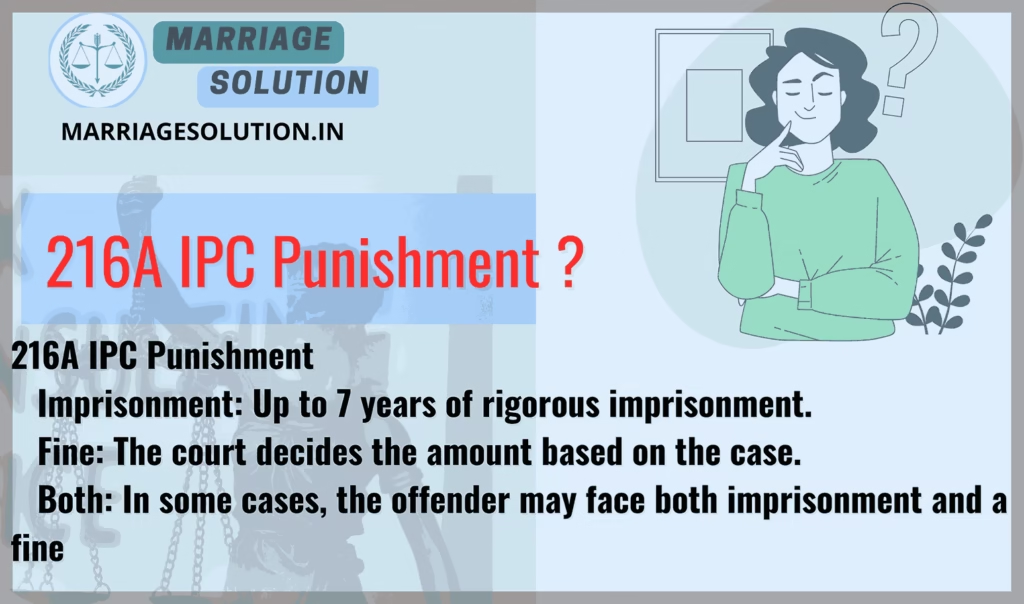
216A IPC Punishment
Imprisonment: Up to 7 years of rigorous imprisonment.
Fine: The court decides the amount based on the case.
Both: In some cases, the offender may face both imprisonment and a fine
216A IPC Bailable or non bailable
- IPC 216A is a Non-Bailable offense.
- The court decides whether to grant bail based on the seriousness of the case.
Section 216A IPC in short information
| IPC Section | Offense | Punishment | Bailable/Non-Bailable | Cognizable/Non-Cognizable | Trial By |
|---|---|---|---|---|---|
| IPC 216A | Harbouring robbers or dacoits | Up to 7 years of imprisonment and fine | Non-Bailable | Cognizable | Sessions Court |
IPC Section 216A FAQs
What is IPC Section 216A?
IPC 216A punishes those who help, shelter, or assist robbers or dacoits, knowing they are criminals.
What is the punishment under IPC 216A?
Up to 7 years of rigorous imprisonment and/or fine, as decided by the court.
Is IPC 216A a bailable offense?
No, IPC 216A is non-bailable, meaning bail is not granted easily.
Can police arrest without a warrant under IPC 216A?
Yes, IPC 216A is a cognizable offense, so police can arrest without a warrant.
Who is exempt from punishment under IPC 216A?
A husband or wife of the offender is not punished under this section if they provide shelter.
If you need support with court proceedings or any other legal matters, don’t hesitate to reach out for assistance.
Court or any other marriage-related issues, our https://marriagesolution.in/lawyer-help-1/ website may prove helpful. By completing our enquiry form and submitting it online, we can provide customized guidance to navigate through the process.