
Introduction to Section 195 BNSS
Section 195 BNSS deals with the power of the police to summon individuals during an investigation, especially in cases involving suspicious or unnatural deaths as covered under Section 194. This section ensures that the police can gather complete and reliable information by questioning those who might have seen or heard something relevant to the case.
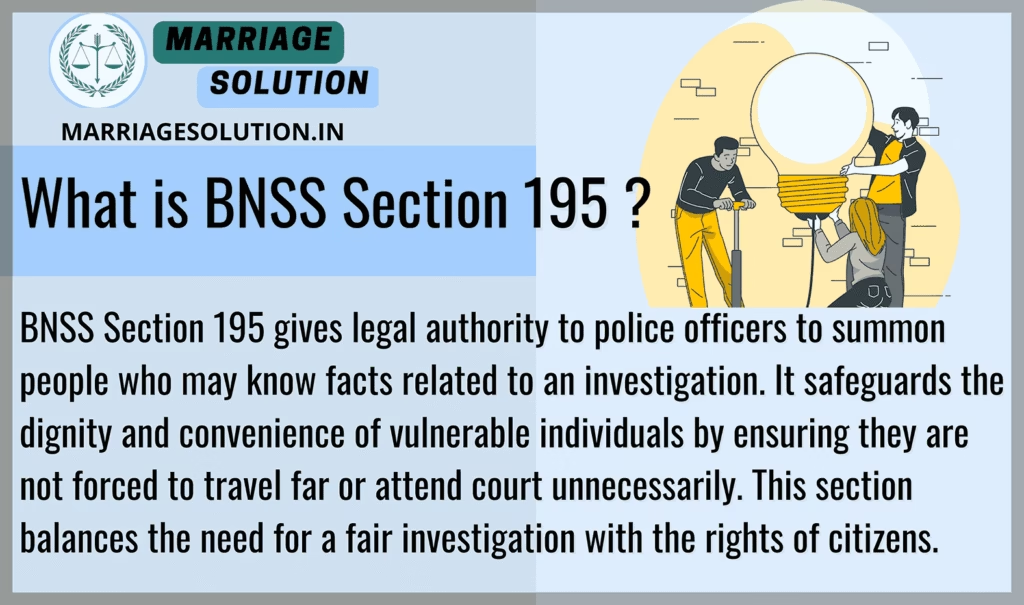
What is BNSS Section 195 ?
BNSS Section 195 gives legal authority to police officers to summon people who may know facts related to an investigation. It safeguards the dignity and convenience of vulnerable individuals by ensuring they are not forced to travel far or attend court unnecessarily. This section balances the need for a fair investigation with the rights of citizens.
BNSS Section of 195 in Simple Points
1. Police Power to Summon
Police officers can issue a written order to summon individuals for questioning during investigations under Section 194. This helps them collect truthful and necessary information from those who may know about the case.
2. Duties of the Summoned Person
Anyone who is summoned must attend and answer all questions honestly, except if answering would lead to self-incrimination or legal trouble. This promotes cooperation while protecting individual rights.
3. Protection for Vulnerable Persons
Special rules apply for elderly people (above 60), minors (below 15), women, and people with disabilities or illness. They can only be questioned at their own residence unless they willingly come to the police station.
4. Option to Attend Voluntarily
If a protected person wants to visit the police station voluntarily, they may be allowed. This provides flexibility and ensures their comfort during the process.
5. Limitations in Non-Cognizable Cases
If the situation does not involve a serious (cognizable) offence under Section 190, the summoned individuals cannot be forced to appear in Magistrate’s Court. This protects them from unnecessary legal pressure.
Section 195 of BNSS Overview
BNSS Section 195 gives power to the police to call or summon people during investigations of suspicious or unnatural deaths under Section 194. It helps gather facts by questioning people who might know about the incident. Special care is taken not to trouble elderly people, women, minors, or sick persons. It ensures fair investigation while protecting individual rights.
10 Key Points of BNSS 195 Explained in Detail
1. Empowering Police to Summon Individuals
BNSS Section 195 grants police officers the legal authority to summon individuals during investigations under Section 194. This includes any person who may have knowledge about the suspicious or unnatural death being investigated. The summon is issued in writing, and the person summoned is expected to assist the investigation. This provision strengthens the evidence collection process. It helps the police reach closer to the truth through witness cooperation. Without this power, key information may be lost. This step is crucial for justice delivery. It formalizes the collection of supporting statements.
2. Obligation to Respond Honestly
Anyone summoned under this section must attend the inquiry and answer questions truthfully. However, the law protects individuals from self-incrimination. That means a person is not required to answer questions that could lead to them being charged with a crime. This balance between duty and rights ensures fair and lawful investigation practices. It prevents forced confessions or the misuse of police authority. Honest answers are critical to uncovering facts. This clause ensures cooperation without compromising personal rights. The section thus enforces justice with dignity.
3. Special Protections for Vulnerable Groups
BNSS 195 includes strong safeguards for vulnerable individuals such as children, senior citizens, women, and those with physical or mental disabilities or serious illnesses. These persons cannot be required to appear at a police station or any place other than their residence. This ensures that the process remains sensitive and considerate. It reduces stress and potential trauma during investigations. Police must visit these individuals at their homes for statements. The provision respects their limitations. It also encourages participation without fear or burden.
4. Voluntary Attendance Allowed
While protected persons cannot be forced to attend, the law allows them to voluntarily appear at the police station if they are willing. This flexibility is crucial in cases where the person prefers to be present in a more formal setting. The police can then take their statement at the station. This clause promotes convenience and cooperation. It ensures that investigations proceed smoothly without compromising on comfort. It respects individual choice while supporting justice. The option enhances inclusiveness in investigation.
5. Only in Relevant Cases
This power is specifically meant for cases under Section 194, which involves suspicious, accidental, or unnatural deaths, including possible suicides or homicides. The police officer must be acting under that section to use the powers under Section 195. It ensures that the power to summon is not used arbitrarily. It restricts misuse and keeps investigations targeted. This clause limits scope to serious and sensitive matters. It keeps the system focused on justice. Misuse or unrelated use is not permitted.
6. No Compulsion for Non-Cognizable Offences
If the facts of the case do not reveal a cognizable offence—meaning one where police can arrest without a warrant—then the summoned individuals cannot be forced to appear in a Magistrate’s court. This protection prevents unnecessary legal trouble for people who are not directly involved in serious crimes. It respects their time and rights. The law maintains a fair boundary between criminal and civil roles. Police authority is not absolute in such cases. This clause keeps things lawful and proportional.
7. Role in Inquest Investigations
The provision supports the investigation process during inquests under Section 194, which includes cases of mysterious deaths. Witnesses or locals with useful knowledge can be brought in to assist with identifying the cause of death. This helps the Executive Magistrate to make better informed conclusions. The inclusion of eyewitnesses or nearby residents can reveal key facts. This clause links Section 195 closely with Section 194. It enables complete documentation of events. Their input could determine whether a crime occurred.
8. Written Summons Format
Police must issue summons in writing. This ensures transparency and provides a record of who was called and why. It also protects the rights of the person summoned, by allowing them to request legal counsel or support. A written order reduces the chance of verbal threats or coercion. It formalizes the process. It also helps in legal reviews if needed later. The written format promotes accountability. It protects both the investigator and the witness.
9. Respect for Legal Boundaries
The provision makes it clear that while police can summon for questioning, it cannot force testimony that could cause legal harm to the individual. This keeps the process lawful and ensures that people feel safe in cooperating. Protecting against self-incrimination aligns with fundamental rights. This point reassures the public about their legal safety. It promotes confidence in the system. It also aligns with constitutional protections. No person should suffer from helping an investigation.
10. Encouraging Public Cooperation
Overall, Section 195 aims to build a bridge between the police and the public. By offering protections and flexibility, while still expecting truthful cooperation, it creates a balanced investigation process. People are more likely to assist when they know their rights are protected. The section is designed to support justice while being fair and humane. It enables community participation in serious investigations. This builds trust and efficiency in law enforcement. Justice becomes a shared responsibility.
2 Real-Life Examples of BNSS Section 195
- Example 1:
A woman dies under suspicious circumstances in her in-laws’ house. The police summon neighbors and relatives to understand the situation. An elderly neighbor is allowed to give her statement from home, as she is over 60. - Example 2:
A factory worker is killed in a machinery accident. The officer summons two co-workers to record their statements. One of them, a 14-year-old boy, gives his statement at home due to age-related protection under BNSS 1
Section 195 of BNSS Short Information
| Key Point | Explanation |
|---|---|
| 1. Police Power to Summon People | Police officers can issue written summons to any person who may have information about a suspicious or unnatural death being investigated under Section 194. |
| 2. Obligation to Answer Truthfully | Anyone summoned must attend and answer questions honestly, except if doing so would lead to self-incrimination or legal harm to themselves. |
| 3. Protection for Vulnerable Persons | Women, children under 15, elderly persons above 60, and people with disabilities or illness cannot be required to visit the police station. They can be questioned at their home. |
| 4. Voluntary Attendance Allowed | Protected individuals can still attend voluntarily if they wish. This gives flexibility while maintaining comfort and personal safety. |
| 5. Written Summons Required | Every summon must be issued in writing to maintain transparency and provide legal proof. It also helps protect both the police and the individual involved. |
BNSS Section 195 FAQs
BNSS 195
Conclusion
BNSS Section 195 ensures that the police can effectively gather facts by summoning people during investigations, especially in suspicious or unnatural death cases under Section 194. At the same time, it protects the rights of citizens—particularly women, children, seniors, and those with disabilities—by allowing them to give statements from home. This balance between investigative power and human dignity promotes fair, respectful, and transparent policing.
Need Legal Support?
If you are dealing with court cases, marriage problems, or any other legal issue, our team at Marriage Solution – Lawyer Help is here for you. Simply fill out our quick online enquiry form, and we’ll connect you with the right legal expert to support your needs .
Finished with BNSS Section 195 ? Continue reading the next sections of the Bharatiya Nagarik Suraksha Sanhita (BNSS), 2023. Each section is explained in easy words, with simple examples, so anyone can understand it clearly.
- Section 196 BNSS : Judicial Inquiries into Suspicious Deaths .
- Section 197 BNSS : Understanding the Ordinary Place of Criminal Trials .
- Section 198 BNSS : Place of Inquiry or Trial .
- Section 199 BNSS : Trial Jurisdiction Based on Act or Consequence .
Full BNSS Section List: https://marriagesolution.in/bnss_section-list/
Full BNS Section List: https://marriagesolution.in/bharatiya-nyaya-sanhita-section-list/
Full IPC Section List: https://marriagesolution.in/ipc-section-list
All Indian Law & Blogs: https://marriagesolution.in/indian-law/
Need Legal Help? Speak to an Experienced Lawyer Now.

Court Marriage in India: Complete Process, Timeline & Inter-Caste Incentives
More couples in India are choosing court marriage over traditional ceremonies every year — whether for simplicity, personal choice, or the legal recognition it provides without the scale of a full wedding. A court marriage is like a legal love…

Right to Information RTI act :Your Comprehensive Guide (Part 1)
The Right to Information (RTI) Act : Explore the essence of the Right to Information (RTI) Act through this symbolic image. The image features legal documents, emphasizing the importance of transparency and accountability in governance. The scales of justice represent…

What is Article 371 of Indian Constitution ?
Article 371 of the Indian Constitution grants special provisions to specific states and regions within India, addressing their unique historical, social, and cultural circumstances. These provisions aim to accommodate diverse needs and protect cultural identities within the constitutional framework.
Indian Labour law : Your Comprehensive Guide (Part 1)
The purpose of labour laws is to safeguard employees and guarantee equitable treatment at the workplace, encompassing aspects such as remuneration, security, and perks. These regulations establish a secure ambiance by imposing minimum wage requirements, ensuring factory safety measures are…