
Introduction to Section 298 BNSS
Section 298 BNSS is about protecting the special rules of Chapter XXIII of the Bharatiya Nagarik Suraksha Sanhita, 2023. This chapter deals mainly with plea bargaining and special case processes. Section 298 makes sure that these special rules will apply fully, even if some other part of the BNSS says something different. It acts like a shield to protect the meaning and importance of this chapter during court cases.
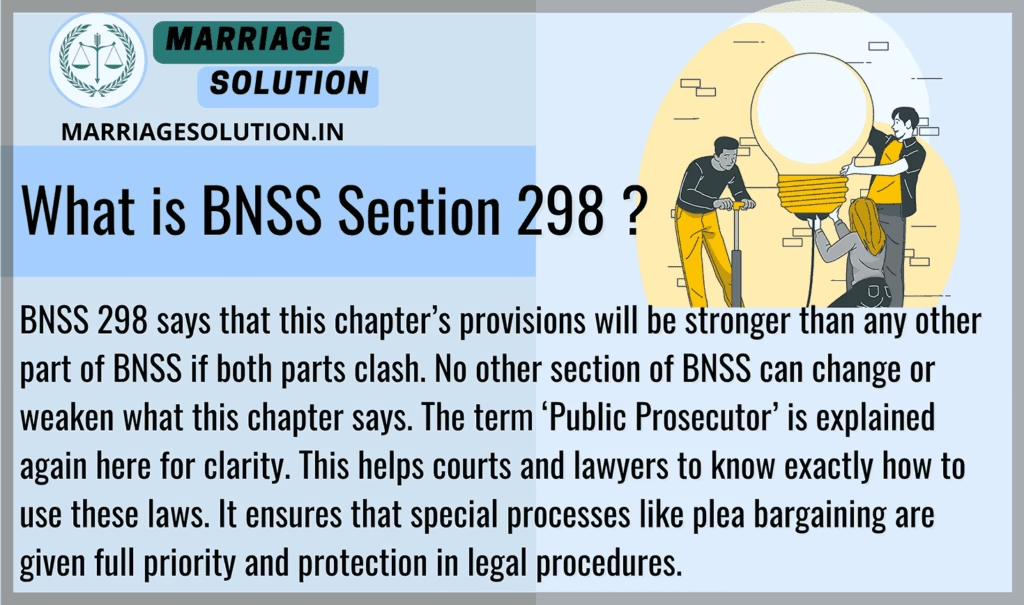
What is BNSS Section 298 ?
BNSS 298 says that this chapter’s provisions will be stronger than any other part of BNSS if both parts clash. No other section of BNSS can change or weaken what this chapter says. The term ‘Public Prosecutor’ is explained again here for clarity. This helps courts and lawyers to know exactly how to use these laws. It ensures that special processes like plea bargaining are given full priority and protection in legal procedures.
BNSS Section of 298 in Simple Points
1. Priority to Special Provisions
BNSS 298 clearly says that the special rules of Chapter XXIII will have priority over any other general rules of BNSS. If there is a conflict between this chapter and other sections, this chapter’s rules will be followed first. This ensures that important special procedures, like plea bargaining, are not blocked by other general rules. Courts must respect this priority during trials. This helps maintain a uniform process in all courts across India.
2. Overriding Effect on Conflicting Laws
Section 298 acts like a shield for Chapter XXIII. Even if some other BNSS section says something different, BNSS 298 will cancel out that conflict. The goal is to make sure that special procedures are used properly and without delay. This makes the legal system faster and simpler. People involved in the case—accused, victims, or lawyers—benefit because there’s no confusion about which law applies.
3. Definition of Public Prosecutor
BNSS 298 also gives an official definition for the term ‘Public Prosecutor’ in this chapter. It uses the meaning from Section 2(v) of BNSS and also includes Assistant Public Prosecutors appointed under Section 19. This is important because it makes sure that courts know exactly who can act as Public Prosecutors. It helps in ensuring that proper legal officers handle cases during plea bargaining or other proceedings under this chapter.
4. Smooth Legal Procedures
Thanks to BNSS 298, special case processes like plea bargaining are protected. Without this section, other BNSS rules might create confusion about which law should apply. By giving clear authority to Chapter XXIII, it ensures that trials or settlements run smoothly. Judges can make faster decisions, and accused persons get clarity on their legal rights. This helps both the courts and the people.
5. Uniformity Across India
BNSS 298 promotes uniform application of laws in all courts of India. Without this rule, different courts might follow different interpretations of BNSS provisions. But with this savings clause, it guarantees that plea bargaining and special trial procedures work the same way everywhere. This gives fairness to all parties involved. Everyone gets equal treatment, no matter which part of India their case is in.
Section 298 of BNSS Overview
The main purpose of BNSS Section 298 is to give priority to the provisions of Chapter XXIII. If there is any conflict between the general rules of BNSS and the special rules of this chapter, BNSS 298 gives power to this chapter to be followed. It also clearly defines the meaning of ‘Public Prosecutor’ for this chapter. This ensures that plea bargaining and related processes work smoothly and without confusion.
BNSS Section 298 : 10 Key Points Explained
1. Special Importance of This Chapter
BNSS Section 298 makes it clear that the rules mentioned in this chapter are very special and important. These rules will apply even if any other part of this law says something different. If any confusion happens between this chapter and other parts of BNSS, this chapter’s rules will be followed first. It protects the meaning and purpose of this chapter fully. Courts and lawyers cannot use other parts of BNSS to weaken or reduce the importance of this chapter. This ensures fair treatment under special procedures.
2. What Happens in Case of Conflict with Other BNSS Sections
Sometimes, two parts of a law may seem different or contradictory. BNSS 298 solves that problem clearly. If any rule in this chapter is different from any other rule in BNSS, this chapter will win and will be followed. No other part of BNSS will be allowed to change or limit the meaning of this chapter. This prevents confusion in courts and ensures smooth handling of cases related to plea bargaining and special disposal processes.
3. Meaning of “Public Prosecutor” in BNSS 298
BNSS Section 298 also provides a special meaning for the word ‘Public Prosecutor’ in this chapter. It says ‘Public Prosecutor’ means the one explained in Section 2(v) of BNSS. It also includes Assistant Public Prosecutors appointed under Section 19 of BNSS. This ensures that there is no confusion about who is responsible for representing the government side in these special case processes. This clear definition helps maintain fairness in trials and hearings.
4. Focus on Special Process under Chapter XXIII
BNSS Section 298 belongs to Chapter XXIII of the BNSS, which deals with plea bargaining and related case processes. This chapter provides a faster and easier way to solve criminal cases, especially when both sides agree. Section 298 makes sure that no other part of the law will stop or confuse this special system. It builds trust in plea bargaining by giving it full legal support even if other sections look different.
5. Why This “Savings Clause” is Needed
BNSS 298 acts as a safety lock for this chapter. Without this savings clause, other parts of BNSS might be used to challenge or limit the process of plea bargaining. To protect the spirit and usefulness of this chapter, BNSS 298 gives it stronger legal standing. It ensures that courts, lawyers, or other legal provisions cannot interpret this chapter in a weak or unclear way. It safeguards justice by keeping plea bargaining meaningful.
6. Clarity in Legal Process for Plea Bargaining
BNSS 298 brings clarity and strength to the legal process of plea bargaining. By giving this chapter priority, it helps courts avoid delays and legal complications. Imagine two parts of BNSS saying different things about handling an accused person — BNSS 298 ensures that this chapter’s procedure will be final. This clarity saves time, reduces confusion, and gives confidence to both accused persons and victims that the process will be fair and final.
7. No Impact on Other General Provisions
While BNSS 298 gives this chapter power over other parts in case of conflict, it does not cancel or remove other general provisions of BNSS. The other sections will continue to apply normally unless they go against the special provisions of this chapter. This balance allows the whole law to work together, but always with priority given to plea bargaining-related processes when needed. It maintains both order and flexibility in the law.
8. Role of the Court and Public Prosecutor
With BNSS 298, courts and public prosecutors have a clear responsibility to follow this chapter fully when handling relevant cases. They cannot skip or ignore these rules even if other parts of the BNSS suggest different procedures. This makes sure that the accused, victims, and prosecution all get a fair and transparent procedure during plea bargaining or special disposal cases. The Public Prosecutor plays a key role in helping courts follow this section properly.
9. Supports Efficient Justice Delivery
One of the main aims of BNSS 298 is to support efficient and timely delivery of justice. Special processes like plea bargaining help reduce the burden on courts and speed up case disposal. By giving this chapter higher priority, BNSS 298 ensures that time-saving procedures work properly. This means victims get justice faster, and accused persons do not have to wait unnecessarily for long trials if a fair agreement can be reached early.
10. Contribution to Modernizing Indian Criminal Law
BNSS 298 shows India’s move toward modern, fast, and fair criminal processes. By clearly defining how plea bargaining and special case processes will override conflicting laws, it brings certainty, trust, and fairness to the system. It supports the idea that laws should not only punish but also provide practical solutions for minor offences. BNSS 298 protects the independent working of this chapter and promotes justice with dignity for all involved.
Example 1:
If Section 298 of BNSS says the accused can go for plea bargaining, but another BNSS section talks about a longer trial, Section 298 will apply first to keep the case faster and fairer.
Example 2:
Suppose a lawyer argues that another BNSS section does not allow plea bargaining in a particular case. BNSS 298 ensures that the special plea bargaining rule will still apply, avoiding confusion.
Section 298 of BNSS Short Information
| No. | Key Point | Simple Explanation |
|---|---|---|
| 1 | Priority of Special Provisions | Rules of Chapter XXIII must be followed first, even if other BNSS sections say something different. |
| 2 | Overrides Conflicting Laws | If any BNSS rule conflicts with this chapter, this chapter’s rule will apply. It acts as a legal shield. |
| 3 | Definition of Public Prosecutor | Includes Public Prosecutors under Section 2(v) and Assistant Public Prosecutors appointed under Section 19. |
| 4 | Ensures Smooth Procedures | Prevents confusion during plea bargaining by giving clear priority to special rules of this chapter. |
| 5 | Uniformity Across India | Courts across India must follow these rules the same way, ensuring equal treatment everywhere. |
BNSS Section 298 FAQs
BNSS 298
Conclusion
BNSS Section 298 ensures that the special rules of Chapter XXIII, mainly related to plea bargaining, override any conflicting BNSS provisions. It also clarifies who is considered a Public Prosecutor under this chapter. This section guarantees smooth, uniform, and confusion-free implementation of plea bargaining across India.
Need Legal Support?
If you are dealing with court cases, marriage problems, or any other legal issue, our team at Marriage Solution – Lawyer Help is here for you. Simply fill out our quick online enquiry form, and we’ll connect you with the right legal expert to support your needs .
Finished with BNSS Section 298 ? Continue reading the next sections of the Bharatiya Nagarik Suraksha Sanhita (BNSS), 2023. Each section is explained in easy words, with simple examples, so anyone can understand it clearly.
- Section 299 BNSS : Accused’s Plea Bargaining Statements Not Valid for Other Legal Use .
- Section 300 BNSS : Special Protection for Juveniles in Legal Cases .
- Section 301 BNSS : Definitions of Detained and Prison Explained .
- Section 302 BNSS : Court Orders for Attendance of Prisoners.
Full BNSS Section List: https://marriagesolution.in/bnss_section-list/
Full BNS Section List: https://marriagesolution.in/bharatiya-nyaya-sanhita-section-list/
Full IPC Section List: https://marriagesolution.in/ipc-section-list
All Indian Law & Blogs: https://marriagesolution.in/indian-law/
Need Legal Help? Speak to an Experienced Lawyer Now.

Court Marriage in India: Complete Process, Timeline & Inter-Caste Incentives
More couples in India are choosing court marriage over traditional ceremonies every year — whether for simplicity, personal choice, or the legal recognition it provides without the scale of a full wedding. A court marriage is like a legal love…
Right to Information RTI act :Your Comprehensive Guide (Part 1)
The Right to Information (RTI) Act : Explore the essence of the Right to Information (RTI) Act through this symbolic image. The image features legal documents, emphasizing the importance of transparency and accountability in governance. The scales of justice represent…

What is Article 371 of Indian Constitution ?
Article 371 of the Indian Constitution grants special provisions to specific states and regions within India, addressing their unique historical, social, and cultural circumstances. These provisions aim to accommodate diverse needs and protect cultural identities within the constitutional framework.
Indian Labour law : Your Comprehensive Guide (Part 1)
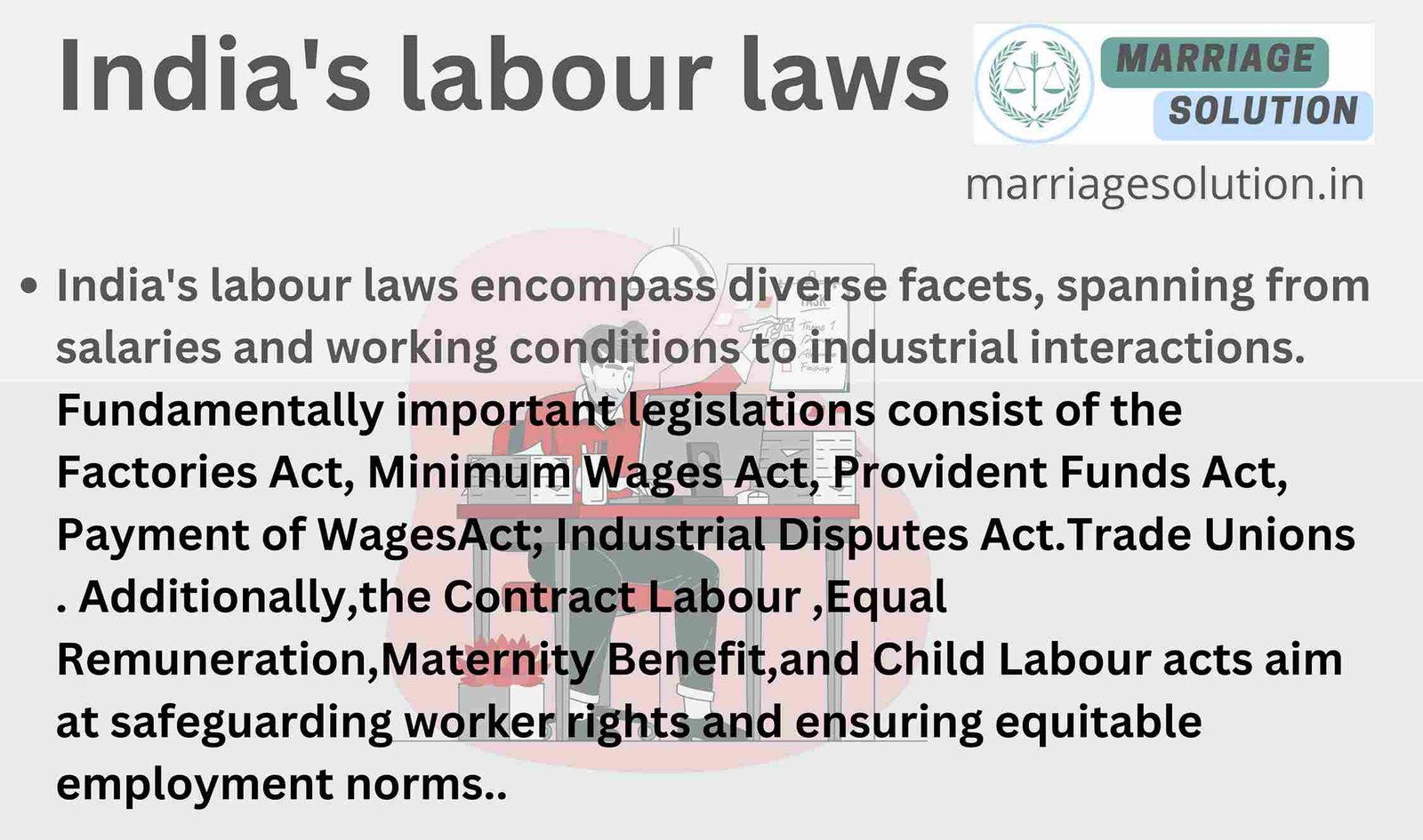
The purpose of labour laws is to safeguard employees and guarantee equitable treatment at the workplace, encompassing aspects such as remuneration, security, and perks. These regulations establish a secure ambiance by imposing minimum wage requirements, ensuring factory safety measures are…