
Introduction to Section 341 BNSS
BNSS Section 341 talks about free legal aid to accused persons who cannot afford a lawyer during criminal trials or appeals. It ensures that no one is denied justice just because they are poor. If the court finds that the accused has no money to hire an advocate, it must assign a lawyer at the cost of the State. This is a major step towards fair trial, legal equality, and human dignity.
What is BNSS Section 341 ?
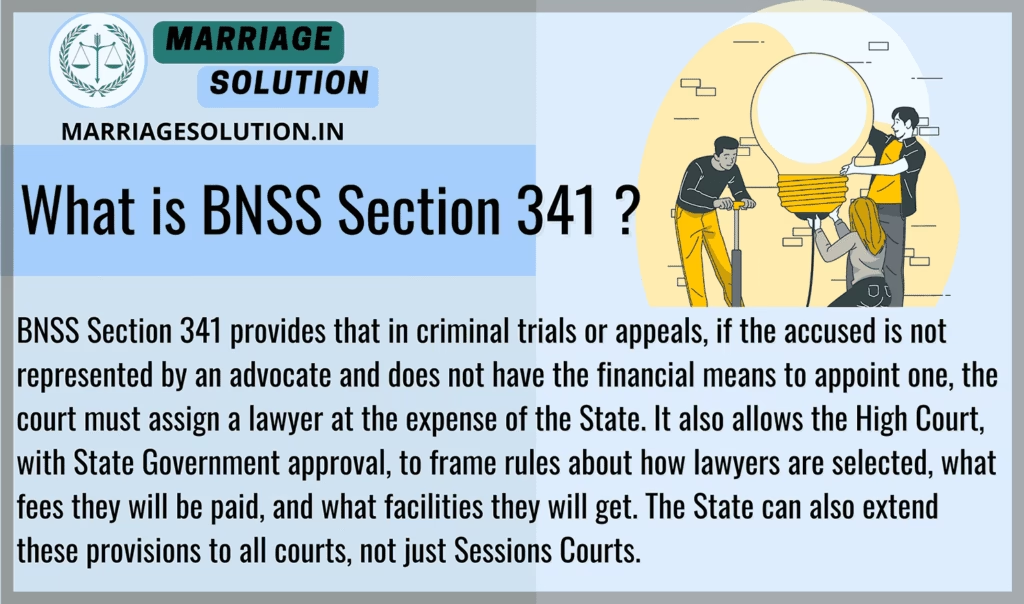
BNSS Section 341 provides that in criminal trials or appeals, if the accused is not represented by an advocate and does not have the financial means to appoint one, the court must assign a lawyer at the expense of the State. It also allows the High Court, with State Government approval, to frame rules about how lawyers are selected, what fees they will be paid, and what facilities they will get. The State can also extend these provisions to all courts, not just Sessions Courts.
BNSS Section of 341 in Simple Points
1. Free Legal Aid for Poor Accused Persons
BNSS Section 341 makes sure that poverty is not a barrier to justice. If an accused person is brought before a court and cannot afford a lawyer, the judge must assign one at the expense of the State. This helps the person understand their rights and fight the case fairly. Without a lawyer, an innocent person could be wrongly punished. This provision ensures the legal system is fair and equal for all.
2. Court’s Duty to Appoint an Advocate
The court does not wait for the accused to request a lawyer. If the court sees that the accused has no advocate and no money, it must act on its own. This protects the accused from being unheard or misunderstood in court. The assigned advocate will take over the defence. This rule makes the court more responsible and proactive in delivering justice to all, regardless of their financial status.
3. Rules Set by High Court and State Government
BNSS 341 allows the High Court, with approval from the State Government, to make rules about how advocates will be selected, paid, and supported. These rules help create a clear system so that lawyers are available when needed. It includes deciding the fees, facilities, and proper guidelines. This framework ensures transparency, quality, and timely legal support for the accused.
4. State Government Covers Legal Costs
All expenses for the assigned lawyer must be paid by the State Government, not the accused. This means the person facing trial does not have to spend anything for their defence. It removes the burden from the poor and ensures financial status does not affect legal rights. The government takes responsibility to provide equal justice to all citizens, rich or poor.
5. Can Be Applied in All Types of Trials
Originally, this law applies to Sessions Courts, but the State Government can expand it to all criminal courts by issuing a notification. This allows poor people facing charges in Magistrate Courts and other lower courts to also get help. It ensures complete access to legal aid at every level of the justice system. This flexibility makes the law more inclusive and helpful for the common man.
341 BNSS Overview
BNSS 341 falls under Chapter XXVI of the Bharatiya Nagarik Suraksha Sanhita, 2023, and plays a key role in promoting equal access to justice. It makes legal representation available to the financially weak during trials or appeals. The High Court and State Government can frame rules for selecting advocates, fees, and facilities. The goal is to make sure that no accused person stands alone in court without help, especially when they can’t afford a lawyer.
BNSS Section 341 – Legal Aid to Accused at State Expense in Certain Cases
1. Legal Aid Is a Right for the Poor Accused
BNSS Section 341 ensures that no accused person is left without legal help just because they are poor. If an accused person cannot afford a lawyer, and the court sees this during trial or appeal, the court must assign an advocate. The legal help must be free of cost, and the State must bear the expense. This law supports justice for the underprivileged and ensures that poverty does not become a punishment. It promotes equality before the law for all people.
2. Court Must Act Without Delay
The court does not need to wait for an application from the accused. If it observes that the person is not represented, and that they lack the financial means, the court is required to act immediately. It must appoint a qualified and responsible advocate. This action helps prevent legal delays and unfair trials. The court’s responsibility to assign a lawyer is automatic and protects the fundamental right to a fair trial.
3. Expense Paid by the State Government
BNSS 341 makes it clear that the cost of hiring the advocate is not to be taken from the accused but is completely covered by the State Government. This rule ensures that economic hardship doesn’t stop justice. The State must manage and pay the fees for the appointed lawyer. This provision supports the constitutional guarantee of legal aid under Article 39A of the Indian Constitution and promotes a more inclusive justice system.
4. High Court Can Frame Supporting Rules
Under this section, the High Court has the authority to create rules, with approval from the State Government. These rules can decide how lawyers will be selected, what facilities they get from courts, and how much fee they will be paid. It allows the court to create a proper and uniform structure for legal aid delivery. This rule-making power ensures that the system is organised, fair, and efficient in providing free legal assistance.
5. Advocate Selection Is Regulated
The advocates who are appointed for free defence under this section must be selected according to the rules set by the High Court and the State Government. These rules help to ensure that only qualified, trained, and ethical lawyers are chosen. It stops misuse of the system and protects the interests of the accused. The goal is to make sure that the lawyer assigned will genuinely work in the best interest of the accused.
6. Facilities to Advocates Must Be Provided
BNSS Section 341 also ensures that the court must give necessary facilities to the assigned advocates. This may include access to case records, communication with the accused, and adequate time to prepare the defence. Without these facilities, even a good lawyer may not be able to perform properly. So, the law ensures that the lawyer is not just appointed but also empowered to defend effectively.
7. Government Must Pay Proper Fees
Another important part of this section is that the government must decide and pay suitable fees to these legal aid advocates. This makes sure that lawyers are properly motivated and committed to their duties. A fair payment system prevents negligence or poor-quality defence. It also attracts responsible legal professionals who are serious about defending poor and innocent people.
8. Legal Aid Can Extend to Lower Courts
Initially, this provision applies to trials in Courts of Session. However, the State Government can extend these benefits to lower courts (like Magistrate courts) by notification. This is very important because many criminal cases start in lower courts. By extending legal aid to all courts, the government ensures complete access to justice at every level. This helps poor people get support right from the beginning.
9. Legal Aid Is Part of Human Rights
The right to legal aid is not just a legal rule; it is part of basic human rights and justice principles. Section 341 ensures that a person’s liberty is not taken away just because they don’t have money. Without legal help, a person can be wrongly punished. So, legal aid protects the innocent, the voiceless, and the poor. It brings justice to every person, equally, fairly, and with dignity.
10. Strengthens Democratic Legal System
By giving poor people a voice in court, BNSS Section 341 makes our justice system more democratic, inclusive, and fair. It removes the gap between rich and poor in legal rights. It reflects the Indian value of “justice for all”, not just for the powerful. This section makes sure that every person gets a fighting chance in court, no matter their background. It builds trust in the courts and the Constitution.
Example 1:
Rahul is arrested for a serious offence. In court, he tells the judge he cannot afford a lawyer. The judge finds this true and appoints a qualified legal aid lawyer. Under BNSS Section 341, the government pays for the lawyer, ensuring Rahul gets a fair trial.
Example 2:
Seema, a widow with no income, is facing criminal charges in a Sessions Court. The court notices she has no advocate and insufficient means. The judge appoints a government lawyer for her defence under BNSS 341 at no cost to Seema.
BNSS Section 341 Short Information
| Point | Details |
|---|---|
| Section Name | BNSS Section 341 |
| Main Rule | If an accused cannot afford a lawyer, the court must assign an advocate at State expense to ensure fair representation. |
| Court’s Responsibility | The judge must appoint a lawyer even without a request from the accused if lack of funds is visible. |
| Rule-Making Authority | High Court, with State Government approval, can frame rules for selection, payment, and facilities for legal-aid advocates. |
| State Pays Expenses | All legal-aid costs are covered by the State Government, ensuring poverty doesn’t block access to justice. |
| Extension to All Courts | Originally for Sessions Courts, but State may extend free legal aid to all criminal courts by notification. |
Why Is BNSS Section 341 Needed?
BNSS Section 341 is necessary to protect the fundamental right to a fair trial. In India, many people facing criminal cases are from poor or uneducated backgrounds. Without legal help, they may not understand their rights, evidence, or legal procedures. This can lead to wrongful convictions or unfair punishment. By providing free legal aid, this law ensures that even the weakest in society can stand up in court with confidence. It reduces injustice caused by poverty, inequality, or lack of knowledge. BNSS 341 strengthens democracy by promoting equal legal opportunity and human dignity.
BNSS Section 341 FAQs
BNSS 341
Conclusion
BNSS Section 341 ensures that no accused person is denied justice due to poverty. The court must appoint a lawyer at State expense whenever the accused cannot afford one, and the High Court can regulate how legal-aid advocates are chosen and supported. This section promotes equality, protects human rights, and strengthens the fairness of India’s criminal justice system.
Need Legal Support?
If you are dealing with court cases, marriage problems, or any other legal issue, our team at Marriage Solution – Lawyer Help is here for you. Simply fill out our quick online enquiry form, and we’ll connect you with the right legal expert to support your needs .
Finished with BNSS Section 341 ? Continue reading the next sections of the Bharatiya Nagarik Suraksha Sanhita (BNSS), 2023. Each section is explained in easy words, with simple examples, so anyone can understand it clearly.
- Section 342 BNSS : Procedure for corporation and registered society Accused .
- Section 343 BNSS : Tender of pardon to accomplice .
- Section 344 BNSS : Power to Tender Pardon During Trial .
- Section 345 BNSS : Trial of Pardoned Person for Violating Conditions .
Full BNSS Section List: https://marriagesolution.in/bnss_section-list/
Full BNS Section List: https://marriagesolution.in/bharatiya-nyaya-sanhita-section-list/
Full IPC Section List: https://marriagesolution.in/ipc-section-list
All Indian Law & Blogs: https://marriagesolution.in/indian-law/
Need Legal Help? Speak to an Experienced Lawyer Now.

Court Marriage in India: Complete Process, Timeline & Inter-Caste Incentives
More couples in India are choosing court marriage over traditional ceremonies every year — whether for simplicity, personal choice, or the legal recognition it provides without the scale of a full wedding. A court marriage is like a legal love…

Right to Information RTI act :Your Comprehensive Guide (Part 1)
The Right to Information (RTI) Act : Explore the essence of the Right to Information (RTI) Act through this symbolic image. The image features legal documents, emphasizing the importance of transparency and accountability in governance. The scales of justice represent…

What is Article 371 of Indian Constitution ?
Article 371 of the Indian Constitution grants special provisions to specific states and regions within India, addressing their unique historical, social, and cultural circumstances. These provisions aim to accommodate diverse needs and protect cultural identities within the constitutional framework.
Indian Labour law : Your Comprehensive Guide (Part 1)
The purpose of labour laws is to safeguard employees and guarantee equitable treatment at the workplace, encompassing aspects such as remuneration, security, and perks. These regulations establish a secure ambiance by imposing minimum wage requirements, ensuring factory safety measures are…