
Introduction to Section 342 BNSS
Section 342 BNSS is a special legal provision that explains how the court should deal with a corporation or registered society if it is accused in a criminal case. Since these entities are not individuals, they cannot physically appear in court. This section provides a legal procedure to represent such bodies fairly during inquiry or trial. It ensures that corporate bodies are also accountable under the law, just like individuals.
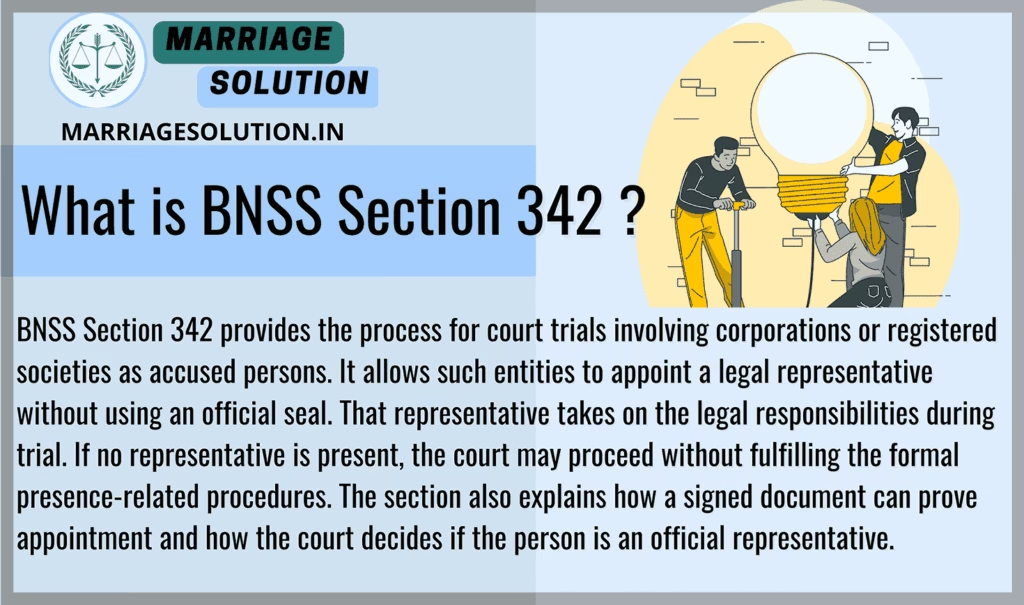
What is BNSS Section 342 ?
BNSS Section 342 provides the process for court trials involving corporations or registered societies as accused persons. It allows such entities to appoint a legal representative without using an official seal. That representative takes on the legal responsibilities during trial. If no representative is present, the court may proceed without fulfilling the formal presence-related procedures. The section also explains how a signed document can prove appointment and how the court decides if the person is an official representative.
BNSS Section of 342 in Simple Points
1. Legal Recognition of Corporations as Accused
BNSS 342 legally allows a corporation or registered society to be treated as an accused in a criminal case. These are non-human legal entities but can be held responsible for crimes like fraud, environmental violations, or financial misconduct. Since they can’t physically appear in court, the law offers a clear structure for prosecution. This ensures they do not escape liability simply because they are not individuals. The section legally empowers courts to bring such entities under criminal accountability.
2. Appointment of a Representative
This section allows a corporation or society to appoint a representative to appear in court during inquiry or trial. The appointment does not require a company seal, making the process simpler. The representative takes the place of the accused in court proceedings. It ensures the company’s legal obligations are met without delay. This also helps courts proceed with the trial in a clear and practical way. The representative must be properly authorised to speak and act on the company’s behalf.
3. Legal Proceedings in Presence of Representative
If a corporation’s representative is present in court, all legal actions—like reading of charges, explanations, or statements—are considered valid if done in their presence. This means that the law considers the representative to be the voice and face of the company. It avoids unnecessary complications in criminal procedure. This ensures companies get a fair process while maintaining judicial efficiency. The representative becomes legally equal to the accused for the purpose of proceedings.
4. Absence of Representative and Legal Consequence
If a corporation fails to send a representative, then certain steps—like explaining charges to the accused—are no longer required. The court can continue the case without completing those formalities. This clause prevents delays and avoids misuse of legal gaps by large entities. It maintains the smooth running of trials, especially in cases where the accused is a non-cooperative organisation. It balances fairness with judicial efficiency.
5. Court’s Power to Decide Valid Representation
When there is confusion or dispute over whether someone is a valid representative of the company, the court has full authority to decide. The court will examine the documents and facts and make a final judgment. This protects the process from misuse and ensures only properly authorised individuals represent companies. It adds a strong layer of legal security and clarity to the entire procedure. Thus, BNSS 342 empowers the court to regulate representation of corporate accused firmly and fairly.
342 BNSS Overview
BNSS 342 is part of Chapter XXVI of the Bharatiya Nagarik Suraksha Sanhita, 2023. It ensures that corporations and registered societies can face legal trials even though they are non-human entities. They are allowed to appoint a representative to appear and participate in the trial on their behalf. This section also provides how courts should deal with their absence, how the appointment should be proven, and what happens if there is a dispute regarding representation. It makes the justice process practical and efficient.
BNSS Section 342 – Procedure When Corporation or Registered Society Is an Accused
1. Meaning of Corporation Under the Law
BNSS Section 342 begins by defining what “corporation” means in the context of legal proceedings. A corporation includes not just companies registered under company law, but also registered societies under the Societies Registration Act, 1860. This definition is important because these entities, even though not living persons, can still be prosecuted for crimes. The law treats these legal entities as responsible for actions done in their name. This section ensures that corporations or societies can be legally accountable just like individuals.
2. Corporations Can Appoint a Representative
If a corporation or registered society is accused in a criminal case, it cannot appear in court like a human. So, BNSS Section 342 allows it to appoint a representative to attend the trial or inquiry. This representative will act on behalf of the corporation during the legal process. Importantly, the appointment does not need the official seal of the corporation, making the process simpler. This provision ensures smooth conduct of the trial even when the accused is a non-living entity.
3. Representative Stands in for the Accused
Once a corporation appoints a representative, all legal actions required to be done “in the presence of the accused” will now be considered valid if done in the presence of that representative. Whether it’s reading charges, explaining the law, or recording a statement, the representative takes the legal place of the corporation. This helps in fulfilling procedural requirements without delay. It ensures that corporations also get the same due process as any individual in a court of law.
4. No Representative Means No Personal Requirements
If the corporation fails to send any representative to court, then sub-section (3) does not apply. This means that all procedures that need the presence or explanation to the accused are not required to be followed. The court can proceed in accordance with law without fulfilling those specific formalities. This prevents delay in proceedings and ensures that corporate entities do not misuse their absence to delay or obstruct the trial process.
5. Written Statement Is Enough for Proof of Appointment
If a written statement is submitted to court, signed by the managing director or any authorised person, confirming the appointment of the representative, the court will presume it to be true unless proven otherwise. This helps in avoiding disputes and confusion over the appointment of representatives. The rule gives clarity and speed to the process. It makes legal proceedings smoother when dealing with organisations.
6. Role of Managing Director or Senior Authority
Only someone with proper authority, like a managing director or another person with control over the corporation’s affairs, can sign the letter that appoints a representative. This prevents misuse or false representation in court. It ensures that only genuine officials can speak for the company. This condition keeps the system fair and prevents unauthorised people from participating in the legal process on behalf of companies or societies.
7. Court Will Decide If There’s a Dispute
If any question arises about whether the person who appears in court is really the representative of the corporation, the final decision lies with the court. The court will examine the facts and decide if the person has been validly appointed or not. This helps in maintaining transparency and authority of the judiciary. It also makes sure that no one misrepresents the corporation or tries to manipulate the proceedings.
8. Ensures Corporations Are Not Above the Law
By allowing prosecution of corporations through appointed representatives, the BNSS ensures that corporate bodies and societies are also answerable to the law. They can be held liable for offences such as fraud, environmental violations, or financial crimes. This provision ensures that legal responsibility is not limited to individuals. It strengthens corporate accountability and makes justice applicable to all forms of legal persons.
9. Practical and Time-Saving Legal Mechanism
This section provides a practical legal mechanism for handling corporate accused without unnecessary complications. It avoids delays that could happen if companies were required to bring official seals or complete complex legal formalities. Instead, it provides a streamlined process where representatives can participate with simple written authorisation. This helps the judiciary manage cases involving companies more efficiently.
10. Promotes Fair Trial for Non-Human Legal Entities
Though corporations and societies are not human, they still need a fair and defined legal process when accused. BNSS Section 342 ensures that they too receive due legal procedure while maintaining judicial efficiency. By recognising their right to representation and standardising how it works, the law ensures a balance between justice and practicality. This section reflects modern legal thinking where organisations are treated as entities with both rights and responsibilities.
Example 1:
A private construction company is accused of violating environmental norms. Under BNSS 342, the company appoints a senior officer to represent it in court. The court accepts this representation and continues the trial with that officer attending all proceedings.
Example 2:
A registered charitable society is accused of financial fraud. No representative appears in court despite several notices. Under BNSS Section 342(4), the court proceeds with the case without needing to fulfill the “in presence of accused” requirement, as no representative has come forward.
BNSS Section 342 Short Information
| Point | Details |
|---|---|
| Section Name | BNSS Section 342 |
| Main Rule | Corporations and registered societies can be treated as accused in criminal cases and held legally accountable. |
| Appointment of Representative | They may appoint a representative to appear in court; no company seal is required for the appointment. |
| Proceedings With/Without Representative | If the representative is present, all legal steps apply normally; if absent, the court may proceed without formalities. |
| Court’s Authority | The court decides any dispute about who is a valid representative, ensuring fair and proper representation. |
Why Is BNSS Section 342 Needed?
BNSS Section 342 is essential because companies and societies are often involved in major economic or social activities that can sometimes lead to criminal conduct. Without this provision, they could not be prosecuted properly, since they are not human. This section creates a legal route to hold them accountable, while ensuring due process. It makes prosecution of white-collar crimes more practical. By allowing representatives to attend trials, it saves time and avoids legal loopholes. It also protects justice by ensuring no one—whether an individual or a company—is above the law.
BNSS Section 342 FAQs
BNSS 342
Conclusion
BNSS Section 342 ensures that corporations and registered societies can be prosecuted just like individuals. By allowing them to appoint representatives and enabling courts to proceed even when no representative appears, the law strengthens corporate accountability, prevents delays, and provides a clear and practical structure for handling non-human accused entities.
Need Legal Support?
If you are dealing with court cases, marriage problems, or any other legal issue, our team at Marriage Solution – Lawyer Help is here for you. Simply fill out our quick online enquiry form, and we’ll connect you with the right legal expert to support your needs .
Finished with BNSS Section 342 ? Continue reading the next sections of the Bharatiya Nagarik Suraksha Sanhita (BNSS), 2023. Each section is explained in easy words, with simple examples, so anyone can understand it clearly.
- Section 343 BNSS : Tender of pardon to accomplice .
- Section 344 BNSS : Power to Tender Pardon During Trial .
- Section 345 BNSS : Trial of Pardoned Person for Violating Conditions .
- Section 346 BNSS : Rules on Postponing and Adjourning Trials .
Full BNSS Section List: https://marriagesolution.in/bnss_section-list/
Full BNS Section List: https://marriagesolution.in/bharatiya-nyaya-sanhita-section-list/
Full IPC Section List: https://marriagesolution.in/ipc-section-list
All Indian Law & Blogs: https://marriagesolution.in/indian-law/
Need Legal Help? Speak to an Experienced Lawyer Now.

Court Marriage in India: Complete Process, Timeline & Inter-Caste Incentives
More couples in India are choosing court marriage over traditional ceremonies every year — whether for simplicity, personal choice, or the legal recognition it provides without the scale of a full wedding. A court marriage is like a legal love…

Right to Information RTI act :Your Comprehensive Guide (Part 1)
The Right to Information (RTI) Act : Explore the essence of the Right to Information (RTI) Act through this symbolic image. The image features legal documents, emphasizing the importance of transparency and accountability in governance. The scales of justice represent…

What is Article 371 of Indian Constitution ?
Article 371 of the Indian Constitution grants special provisions to specific states and regions within India, addressing their unique historical, social, and cultural circumstances. These provisions aim to accommodate diverse needs and protect cultural identities within the constitutional framework.
Indian Labour law : Your Comprehensive Guide (Part 1)
The purpose of labour laws is to safeguard employees and guarantee equitable treatment at the workplace, encompassing aspects such as remuneration, security, and perks. These regulations establish a secure ambiance by imposing minimum wage requirements, ensuring factory safety measures are…