
Introduction to Section 124 BNSS / Legal Cooperation with Foreign Countries
Section 124 BNSS talks about how the Indian government can apply the rules of this chapter in relation to another country, but only if there is a reciprocal legal agreement with that country. The Central Government can decide, through an official notification, what special conditions, exceptions, or rules should apply while cooperating with that foreign country on legal matters like investigation, evidence collection, or property seizure.
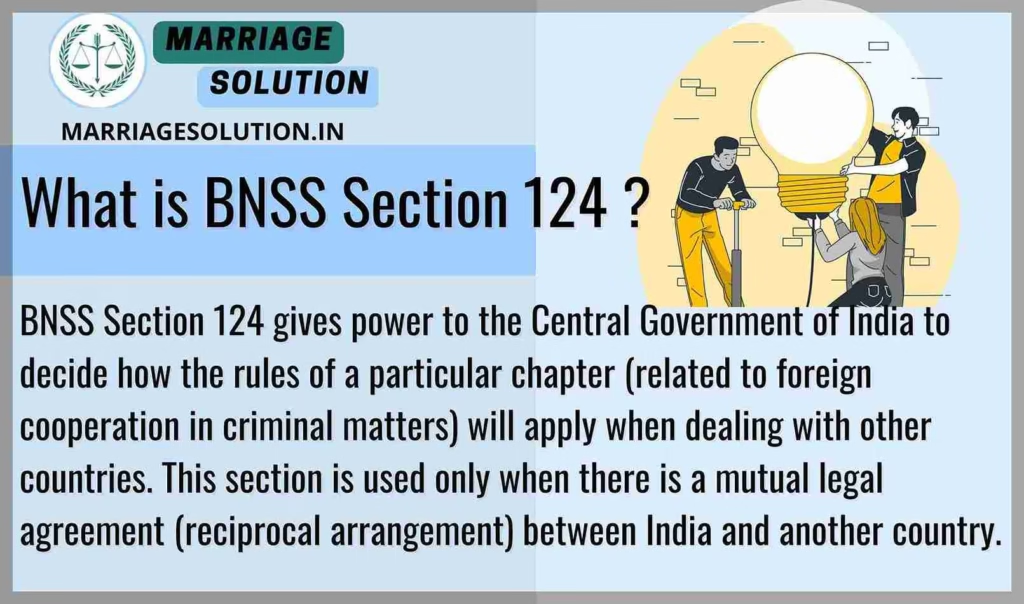
What is BNSS Section 124 ?
BNSS Section 124 gives power to the Central Government of India to decide how the rules of a particular chapter (related to foreign cooperation in criminal matters) will apply when dealing with other countries. This section is used only when there is a mutual legal agreement (reciprocal arrangement) between India and another country.
BNSS Section of 124 in Simple Points
1. Central Government Has Full Control
Only the Central Government of India can decide how the rules under this Chapter will work with other countries. No state government or local authority has the power to make these decisions. The Central Government ensures that India speaks in one voice while dealing with international legal matters. This keeps the process uniform and lawful. It also ensures that foreign cooperation follows a centralised, well-regulated process.
2. Applies to Countries with Reciprocal Arrangements
BNSS Section 124 is applicable only to contracting States, meaning countries that have official legal cooperation agreements (called reciprocal arrangements) with India. These agreements allow both countries to help each other in legal matters such as investigation, arrest, or seizure of property. If no such agreement exists, this section does not apply. It helps India to legally coordinate with friendly countries.
3. Government Can Add Conditions or Exceptions
The Central Government can customize the rules of this Chapter for different countries. It can add conditions, mention exceptions, or allow only specific types of cooperation. For example, with one country India may agree to share documents, but not allow property seizure. These custom rules are published in an official notification, making the cooperation clear and legally binding.
4. Official Notification is Compulsory
Whatever rule or condition the Government decides must be published in the Official Gazette. This step is very important because it gives legal effect to the Government’s decision. Once published, these rules must be followed by courts, police, and all other authorities. This ensures transparency and avoids any misuse or confusion. It also makes the process public and trustworthy.
5. Supports International Crime Control
The main goal of this section is to make international cooperation easier and legal. Crimes like money laundering, terrorism, cyber fraud, or drug trafficking often involve people or property in other countries. BNSS Section 124 allows the Indian Government to work legally with those countries to catch criminals, gather evidence, or seize illegal assets. It strengthens India’s role in global crime control.
Section 124 of BNSS Overview
This section gives power to the Central Government to decide how the rules of this chapter will apply to any foreign country that has a legal cooperation agreement (reciprocal arrangement) with India. The Government can also add special conditions or exceptions by publishing them officially.
10 Key Points : 124 BNSS
1. Applies Only to Contracting States
This section is valid only for those countries that have a formal agreement with India to help each other in legal matters. These agreements are called reciprocal arrangements. The rules of this chapter don’t apply to countries without such agreements. It ensures mutual help between countries. India helps them, and they help India in return. This makes international investigations easier.
2. Central Government Has the Full Power
Only the Central Government of India can take action under this section. State governments or local police have no authority to apply this chapter. The Centre can decide how cooperation will happen. It maintains control over foreign legal matters. This avoids confusion and ensures a single national-level approach.
3. Rules Published in Official Gazette
Whatever decision the Central Government takes must be published in the Official Gazette. This makes the rules official and publicly visible. Once published, the notification becomes legally valid. It ensures that everyone follows the same process. It also makes things transparent and lawful.
4. Conditions Can Be Different for Each Country
The Government can add different rules for different countries. These are based on the legal system and laws of that country. For example, how to send a legal request, what documents are needed, or how to deal with property. These special conditions are clearly mentioned in the notification. This flexibility helps India work smoothly with many countries.
5. Helps in International Investigations
This section supports criminal investigations that go beyond Indian borders. If evidence or people involved are in another country, this law helps request their help. A letter of request can be sent to the foreign country legally. That country can help India collect information or arrest someone. This is very useful in terrorism or cybercrime cases.
6. Enables Property Seizure in Other Countries
If a criminal moves money or property to another country, this section helps Indian agencies to get help from that country. With the proper notification, a request can be made to seize, attach, or freeze that property. This prevents criminals from hiding stolen assets outside India. It helps in fighting economic and financial crimes.
7. Conditions, Exceptions, and Qualifications
The Government can also mention what not to do or what rules to follow differently. These are called conditions, exceptions, or qualifications. They help adjust the rules depending on the country. Some rules might not work in all nations. These exceptions help in customizing cooperation and avoid legal conflicts.
8. Legal Framework for Mutual Legal Assistance Treaties (MLATs)
This section gives the base for MLATs (Mutual Legal Assistance Treaties). These are official agreements between two countries to help each other in legal work. Section 124 makes sure India can use these treaties through proper rules. It ensures both countries know how to cooperate smoothly and legally. This supports better global crime control.
9. India Can Limit or Modify Cooperation
If needed, India can stop or limit legal cooperation with any country. This can happen through a new notification. Reasons can include security risks or political issues. The Central Government has full freedom to change or cancel cooperation if necessary. This ensures India’s national interest is protected.
10. Supports Transparency and Legal Certainty
By publishing all decisions in the Official Gazette, the process remains clear and trustworthy. Courts, police, and foreign agencies all follow the same set of rules. It avoids confusion and ensures all parties know what to do. This increases trust and efficiency in legal help across countries. It also respects the rule of law.
Example 1:
India signs a legal agreement with the UK to help each other in criminal investigations. The Central Government issues a notification stating how requests to and from the UK should be handled. This notification follows BNSS Section 124.
Example 2:
A criminal has moved stolen money to a bank in Canada. India has a mutual legal assistance agreement with Canada. Based on Section 124, the Government notifies the procedure to send a letter of request to Canada for seizure of that money.
Section 124 of BNSS Short Information
| Key Point | Description |
|---|---|
| Applies to Contracting States | This section applies only when India has a mutual legal agreement with another country for cooperation in criminal or legal matters. |
| Central Government’s Power | Only the Central Government can decide how these rules will apply to other countries, ensuring a unified national approach. |
| Official Notification Requirement | All decisions, rules, and conditions must be officially published in the Gazette for legal validity and transparency. |
| Custom Rules and Exceptions | The Government can set different conditions or exceptions for each country depending on the agreement and situation. |
| Helps in Foreign Investigations | Section 124 enables India to seek or provide help in cases like terrorism, money laundering, or cybercrime involving foreign countries. |
| Supports Global Crime Control | By allowing cooperation through official agreements, this section strengthens India’s role in fighting international crimes. |
BNSS Section 124 FAQs
BNSS 124
Conclusion
BNSS Section 124 gives the Central Government the power to decide how India will cooperate with other countries in legal matters. This section applies only when there is a formal agreement between India and that country. The Government can set special rules, add exceptions, or limit cooperation as needed. All such decisions must be published in the Official Gazette for transparency. This law helps India work with foreign governments in fighting global crimes like terrorism, money laundering, and cyber fraud while ensuring that all cooperation follows legal and official procedures.
Need Legal Support?
If you are dealing with court cases, marriage problems, or any other legal issue, our team at Marriage Solution – Lawyer Help is here for you. Simply fill out our quick online enquiry form, and we’ll connect you with the right legal expert to support your needs .
Finished with BNSS Section 124 ? Continue reading the next sections of the Bharatiya Nagarik Suraksha Sanhita (BNSS), 2023. Each section is explained in easy words, with simple examples, so anyone can understand it clearly.
- Section 125 BNSS : Peace Bond After Conviction .
- Section 126 BNSS : Security for Peace from Risky Individuals .
- Section 127 BNSS : Stopping Harmful Content Before It Spreads .
- Section 128 BNSS : Security for Good Behaviour from Suspected Offenders .
Full BNSS Section List: https://marriagesolution.in/bnss_section-list/
Full BNS Section List: https://marriagesolution.in/bharatiya-nyaya-sanhita-section-list/
Full IPC Section List: https://marriagesolution.in/ipc-section-list
All Indian Law & Blogs: https://marriagesolution.in/indian-law/
Need Legal Help? Speak to an Experienced Lawyer Now.

Right to Information RTI act :Your Comprehensive Guide (Part 1)
The Right to Information (RTI) Act : Explore the essence of the Right to Information (RTI) Act through this symbolic image. The image features legal documents, emphasizing the importance of transparency and accountability in governance. The scales of justice represent…

What is Article 371 of Indian Constitution ?
Article 371 of the Indian Constitution grants special provisions to specific states and regions within India, addressing their unique historical, social, and cultural circumstances. These provisions aim to accommodate diverse needs and protect cultural identities within the constitutional framework.
Indian Labour law : Your Comprehensive Guide (Part 1)
The purpose of labour laws is to safeguard employees and guarantee equitable treatment at the workplace, encompassing aspects such as remuneration, security, and perks. These regulations establish a secure ambiance by imposing minimum wage requirements, ensuring factory safety measures are…
GST :Your Comprehensive Guide (Part 1 – Understanding the Basics)
The Goods and Services Tax (GST) is like a big change in how we pay taxes in India. It started on July 1, 2017, and it’s here to simplify things. Before GST, we had many different taxes, and it could…