
Introduction to Section 196 BNSS
Section 196 BNSS of the Bharatiya Nagarik Suraksha Sanhita, 2023, provides guidelines for magistrates to conduct inquiries in cases of unnatural deaths or custodial incidents. It plays a crucial role in ensuring transparency, justice, and accountability when a death or serious offence like rape occurs in custody or under suspicious circumstances.
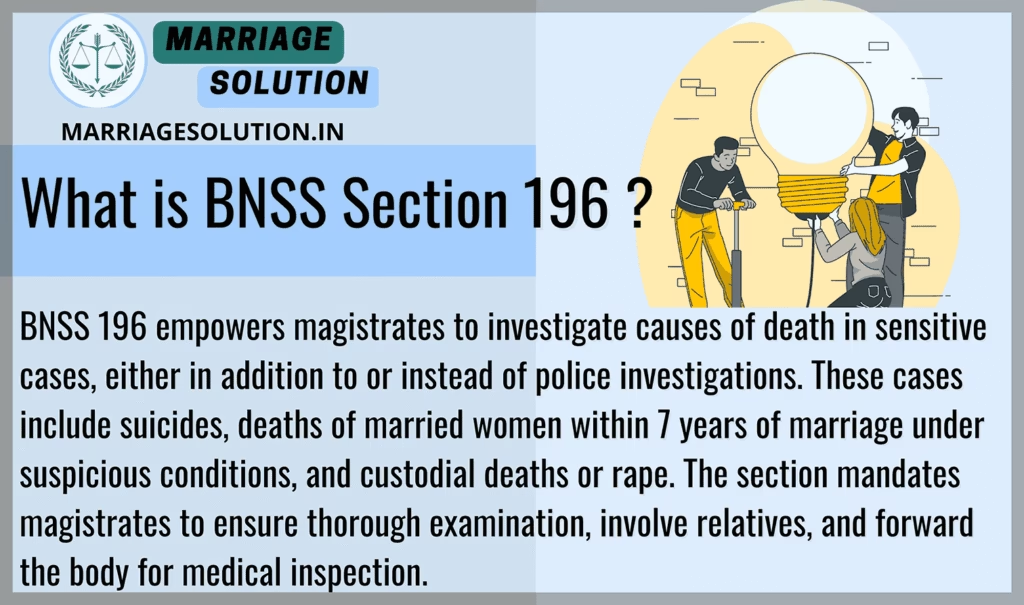
What is BNSS Section 196 ?
BNSS 196 empowers magistrates to investigate causes of death in sensitive cases, either in addition to or instead of police investigations. These cases include suicides, deaths of married women within 7 years of marriage under suspicious conditions, and custodial deaths or rape. The section mandates magistrates to ensure thorough examination, involve relatives, and forward the body for medical inspection.
BNSS Section of 196 in Simple Points
1. Mandatory Magistrate Inquiry in Sensitive Death Cases
BNSS Section 196 mandates that a Magistrate must conduct an inquiry when a woman dies under suspicious circumstances within seven years of marriage. This is especially important if there’s any doubt or allegation of foul play. The inquiry is judicial in nature and ensures an unbiased investigation beyond the police probe. The magistrate can examine witnesses, inspect the site, and demand relevant documents. This prevents tampering with evidence or misuse of power. It strengthens the trust of the victim’s family in the justice system. Such mandatory actions are crucial for delivering justice in sensitive situations.
2. Inquiry in Custodial Deaths and Rape Allegations
When someone dies or disappears in police custody—or if rape is alleged while in custody—BNSS 196 requires a Magistrate to step in. This is done to protect citizens’ rights and prevent misuse of power by authorities. The inquiry is conducted independently of the police investigation. The presence of a judicial authority ensures transparency and accountability. The law mandates that the magistrate conducts this inquiry in their local jurisdiction. Such inquiries are essential in upholding basic human rights. They help in checking custodial violence and abuse of power.
3. Examination of Evidence and Dead Body
The Magistrate has full authority to record statements and collect evidence during the inquiry. This includes written testimonies, physical inspection, and witness cross-examination. If necessary, the magistrate can order the dead body to be exhumed (disinterred) for further medical examination. This ensures that no detail is overlooked. Medical reports are crucial in determining the real cause of death. These steps are especially useful in cases where the body was buried quickly or under suspicious conditions. It helps bring clarity and ensures a just investigation.
4. Relatives’ Right to Be Informed and Present
BNSS 196 ensures that the relatives of the deceased are informed about the inquiry. If their names and addresses are known, the magistrate must make sure they are notified. These relatives (parents, siblings, children, or spouse) have the right to be present during the inquiry. Their presence ensures transparency in the process and helps them stay informed. It builds public confidence in the legal system. It also allows them to raise concerns or questions during the investigation. This provision respects both legal rights and emotional needs of the family.
5. Timeline and Medical Examination Requirement
Under BNSS 196, the dead body must be sent for examination within 24 hours of the death if it occurred in custody. A government medical officer or civil surgeon conducts this examination. The only exception is when it’s not possible to transport the body due to valid reasons, which must be recorded in writing. This time-bound action helps preserve crucial forensic evidence. Delay in medical inspection can lead to the loss of vital clues. This step adds speed, responsibility, and medical accuracy to the investigation.
Section 196 of BNSS Overview
BNSS Section 196 ensures that a magistrate inquires into deaths occurring in suspicious or custodial circumstances. It strengthens accountability and allows relatives to participate in the inquiry. This section promotes justice, especially in cases of custodial violence or unnatural deaths.
10 Key Points of BNSS Section 196
1. Magistrate’s Duty in Suspicious Deaths
If a case involves suspicious death, such as a woman’s death within 7 years of marriage, the nearest empowered magistrate must conduct an inquiry. This inquiry is mandatory in serious cases and may be optional in others. The goal is to ensure that justice is upheld and foul play is properly investigated. The magistrate has powers similar to a criminal inquiry. This adds a layer of legal scrutiny. The inquiry can occur alongside or instead of police investigations. This ensures fairness and transparency. It helps prevent police misconduct.
2. Inquiry in Custodial Deaths and Rape Cases
When a person dies, disappears, or is allegedly raped in police or judicial custody, a magistrate must conduct an independent inquiry. This applies even if the police are also investigating. The inquiry ensures that the state is held accountable for the person’s safety. It’s a vital step in protecting constitutional rights. The magistrate has to operate within their jurisdiction. This adds objectivity and credibility. These cases require quick and impartial action.
3. Recording of Evidence by Magistrate
The magistrate conducting an inquiry must record all evidence properly. This may be done through writing or other acceptable legal formats, depending on the situation. The recorded statements and evidence form part of the legal proceedings. Proper documentation ensures accuracy. It also serves as a reference for further proceedings. This step prevents misrepresentation. It is a key safeguard in the legal process.
4. Disinterment of Dead Body
If necessary, the magistrate may order the exhumation of a buried body for further examination. This helps determine the cause of death more accurately. It’s especially important if doubts remain after an initial post-mortem. The order must be backed by strong reasons. This process must be handled respectfully and legally. It helps find the truth in complex cases. The examination is conducted by a medical expert.
5. Informing the Relatives
The magistrate must inform the deceased’s relatives (if known) about the inquiry. This includes parents, children, spouse, and siblings. Relatives have the right to be present at the inquiry. Their presence increases trust in the process. It ensures that no facts are hidden. It also provides emotional support to the family. This provision promotes transparency.
6. Time Limit for Forwarding the Body
If a person dies in custody, the body must be sent for medical examination within 24 hours. The examination is done by a civil surgeon or government-appointed doctor. The only exception is if transport is not feasible. This ensures no delay in justice. Delays can lead to loss of evidence. Hence, timelines are critical in such cases.
7. Inquiry Parallel to Police Investigation
The magistrate’s inquiry can happen along with a police investigation. This ensures that even if the police are involved in misconduct, justice is not compromised. Dual investigations increase accountability. Both reports may be reviewed in court. It ensures fairness from both legal and administrative perspectives.
8. Custody Cases Require Extra Attention
Deaths in custody are highly sensitive. They often raise questions of human rights violations. BNSS 196 ensures judicial scrutiny in such cases. It reinforces the idea that no one is above the law. It protects individuals from torture and abuse in custody. Such scrutiny ensures justice and improves public trust.
9. Role of Executive Magistrates
The section empowers not just judicial but also executive magistrates to conduct inquiries. The state government may appoint these magistrates specifically for this purpose. It decentralizes investigation powers. It ensures quick response in remote areas. This improves the overall speed and reach of justice delivery.
10. Definition of “Relative” in this Section
The term “relative” is clearly defined to include parents, children, brothers, sisters, and spouses. This definition ensures clarity in who must be informed. It helps magistrates avoid confusion during notification. It also ensures the right family members are involved in proceedings. This clarity strengthens the legal process.
Examples of BNSS 196
Example 1: A 26-year-old woman dies in her in-laws’ house within six years of marriage. Her parents allege foul play. The police begin their inquiry, and the local magistrate is also mandated to conduct an independent inquiry under Section 196 to ensure justice.
Example 2: A young man dies in police custody. Allegations of custodial torture surface. Under BNSS 196, the magistrate conducts an inquiry separate from the police investigation and ensures the body is examined by a government doctor within 24 hours.
Section 196 of BNSS Short Information
| Key Point | Explanation |
|---|---|
| 1. Magistrate Inquiry in Suspicious Deaths | If a woman dies within seven years of marriage or any person dies under suspicious circumstances, the Magistrate must conduct an independent inquiry to ensure fairness and transparency. |
| 2. Custodial Deaths and Rape Cases | When a person dies or is raped in police or judicial custody, the Magistrate must hold an inquiry separate from the police to ensure accountability and protect human rights. |
| 3. Evidence and Medical Examination | The Magistrate can collect statements, inspect the body, and even order re-examination or exhumation if needed. A government doctor must examine custodial deaths within 24 hours. |
| 4. Relatives Must Be Informed | If relatives are known, they must be informed about the inquiry and can attend it. This ensures transparency and gives families confidence in the justice process. |
| 5. Independent and Fair Investigation | The Magistrate’s inquiry runs separately from the police investigation. This helps maintain fairness, avoids bias, and ensures that no one misuses authority during sensitive cases. |
BNSS Section 196 FAQs
BNSS 196
Conclusion
BNSS Section 196 ensures that every suspicious or custodial death, and any case involving rape in custody, is investigated independently by a Magistrate. It mandates quick medical examinations, transparency with families, and fair inquiry beyond police control. This law is vital for protecting human rights, preventing misuse of power, and ensuring justice for victims and their families in sensitive and high-risk cases.
Need Legal Support?
If you are dealing with court cases, marriage problems, or any other legal issue, our team at Marriage Solution – Lawyer Help is here for you. Simply fill out our quick online enquiry form, and we’ll connect you with the right legal expert to support your needs .
Finished with BNSS Section 196 ? Continue reading the next sections of the Bharatiya Nagarik Suraksha Sanhita (BNSS), 2023. Each section is explained in easy words, with simple examples, so anyone can understand it clearly.
- Section 197 BNSS : Understanding the Ordinary Place of Criminal Trials .
- Section 198 BNSS : Place of Inquiry or Trial .
- Section 199 BNSS : Trial Jurisdiction Based on Act or Consequence .
- Section 200 BNSS : Place of Trial for Related Offences .
Full BNSS Section List: https://marriagesolution.in/bnss_section-list/
Full BNS Section List: https://marriagesolution.in/bharatiya-nyaya-sanhita-section-list/
Full IPC Section List: https://marriagesolution.in/ipc-section-list
All Indian Law & Blogs: https://marriagesolution.in/indian-law/
Need Legal Help? Speak to an Experienced Lawyer Now.

Right to Information RTI act :Your Comprehensive Guide (Part 1)
The Right to Information (RTI) Act : Explore the essence of the Right to Information (RTI) Act through this symbolic image. The image features legal documents, emphasizing the importance of transparency and accountability in governance. The scales of justice represent…

What is Article 371 of Indian Constitution ?
Article 371 of the Indian Constitution grants special provisions to specific states and regions within India, addressing their unique historical, social, and cultural circumstances. These provisions aim to accommodate diverse needs and protect cultural identities within the constitutional framework.

Indian Labour law : Your Comprehensive Guide (Part 1)
The purpose of labour laws is to safeguard employees and guarantee equitable treatment at the workplace, encompassing aspects such as remuneration, security, and perks. These regulations establish a secure ambiance by imposing minimum wage requirements, ensuring factory safety measures are…
GST :Your Comprehensive Guide (Part 1 – Understanding the Basics)
The Goods and Services Tax (GST) is like a big change in how we pay taxes in India. It started on July 1, 2017, and it’s here to simplify things. Before GST, we had many different taxes, and it could…