
Introduction to Section 302 BNSS
Section 302 BNSS falls under Chapter XXIV of the Bharatiya Nagarik Suraksha Sanhita, 2023, which deals with the attendance of persons confined or detained in prisons. This section empowers courts to legally order the production of prisoners if their presence is required for trial, inquiry, or as a witness. It ensures that justice is not delayed or denied just because a person is in custody.
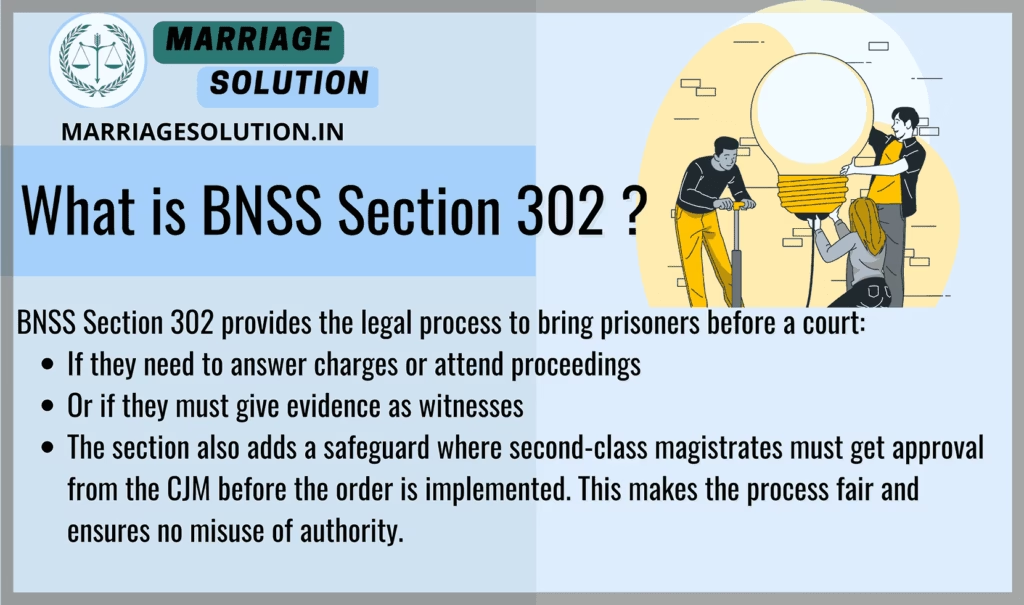
What is BNSS Section 302 ?
BNSS Section 302 provides the legal process to bring prisoners before a court:
- If they need to answer charges or attend proceedings
- Or if they must give evidence as witnesses
The section also adds a safeguard where second-class magistrates must get approval from the CJM before the order is implemented. This makes the process fair and ensures no misuse of authority.
BNSS Section of 302 in Simple Points
1. Court’s Right to Call Prisoners to Court
BNSS Section 302 empowers courts to order that a person who is confined in prison be brought before the court. This power is applicable during any stage of legal proceedings—be it inquiry, trial, or any other court action. If the court believes that the prisoner is either the accused in the case or has relevant information as a witness, they can be summoned. The court issues an official order to the officer-in-charge of the prison. This ensures the smooth conduct of proceedings without delay. It also promotes equal justice by including every necessary party.
2. Situations Where Prisoners Are Required
There are two main conditions where BNSS 302 applies. The first is when the person is required to answer criminal charges, meaning they are directly involved in the case. The second is when the person is needed as a witness, which means they have information important to the case. This wide scope helps ensure that courts can take help from any confined person, even if they are involved in a different case or serving a sentence. It helps in complete fact-finding and promotes fair judgment.
3. Approval by Chief Judicial Magistrate
If a second-class Magistrate wants to issue such an order, it must be countersigned by the Chief Judicial Magistrate (CJM). This rule ensures that power is not misused or applied unnecessarily. The countersigning requirement acts as a check and balance. The second-class Magistrate must also submit a statement of facts explaining why the prisoner is needed. The CJM may approve or decline the request after reviewing the explanation. This process protects prisoners from being called to court without a valid reason.
4. Safeguards for Prisoner’s Rights
BNSS 302 includes built-in safeguards to ensure that the rights of detained persons are protected. Courts cannot call prisoners at will. There must be valid reasons and a legal process followed. Orders issued must be clear and approved where required. This section helps avoid unjustified harassment of prisoners and ensures that the law is used only when necessary. It keeps the judicial system fair and balanced for both accused persons and innocent witnesses in prison.
5. Smooth Coordination Between Court and Jail
This section also builds a legal bridge between the judiciary and prison authorities. The prison in-charge must follow the court order and present the prisoner as instructed. At the same time, the court must ensure that orders are not casually issued. This system creates discipline and coordination between two important institutions: the judiciary and the jail administration. It helps avoid delays in trials due to non-availability of prisoners and ensures the judicial process runs smoothly.
Section 302 of BNSS Overview
BNSS 302 gives criminal courts the authority to call any detained person from jail if their presence is important in a case. This includes when they are accused or when they are needed as a witness. If the order is issued by a Magistrate of the second class, it must be countersigned by the Chief Judicial Magistrate (CJM). This ensures a transparent and controlled system where justice and prisoner rights go hand-in-hand.
BNSS Section 302 – Power to Require Attendance of Prisoners
1. Purpose of Section 302
BNSS Section 302 gives power to Criminal Courts to bring a prisoner to court if needed. This can be during inquiry, trial, or any legal proceeding. If the court feels that a person who is detained or confined should be present before it, the court can order their attendance. This ensures that justice is not delayed just because someone is in jail. Whether the person is accused or a witness, the court can call them. It gives the court the right to involve every person necessary for the fair trial process. This improves the justice delivery system.
2. When a Prisoner Can Be Called
Section 302 explains two situations when a prisoner can be ordered to attend court. First, if the person needs to answer charges in a case or take part in a proceeding against them. Second, if the court needs to examine them as a witness. This means even if a person is not the accused, but has important information, the court can call them. This gives wide powers to the court to collect truth from every possible source, including from jails. It ensures that no useful testimony is missed during a trial.
3. Court’s Authority to Issue Order
The court can issue a direct order to the officer in charge of the prison. This order tells the officer to bring the prisoner to court for a specific purpose—either to face charges or give evidence. This is a legal and binding order. The prison officer is required to obey and arrange for the prisoner’s secure transport to the court. This ensures smooth coordination between the judiciary and prison administration. It also avoids unnecessary delays in the case proceedings due to the prisoner’s absence.
4. Role of Magistrate of Second Class
If the order is made by a Magistrate of the Second Class, it is not directly valid. Such an order must be countersigned by the Chief Judicial Magistrate (CJM). Without this approval, the order cannot be forwarded to the jail officer or acted upon. This is done to maintain checks and balances in the system. It ensures that the decision to call a prisoner is reviewed by a higher authority. This process avoids misuse of power and protects the rights of detained persons.
5. Countersignature by Chief Judicial Magistrate (CJM)
The Chief Judicial Magistrate (CJM) has the right to approve or reject the request. When the Magistrate sends the order for countersigning, it must include a written statement explaining why the prisoner’s attendance is necessary. The CJM will read the facts and decide fairly if the order should go ahead. If not convinced, the CJM can refuse to sign. This prevents unnecessary disturbance to the prisoner and ensures only genuine and justified reasons lead to their court attendance.
6. Legal Protection for Prisoners
This section protects the rights of prisoners by ensuring that they are not brought to court unnecessarily. There must be valid legal reasons, properly reviewed by higher authorities like the CJM. This process respects the prisoner’s dignity and avoids any misuse of judicial powers. It also prevents the waste of state resources in transporting prisoners when not required. Only in important or justice-related matters can a prisoner be ordered to attend court.
7. Coordination Between Courts and Jails
BNSS Section 302 strengthens the coordination between the judiciary and prison departments. Clear instructions and countersignatures mean that jail officials only act on proper legal orders. This creates a smooth system where every department knows its responsibility. It helps maintain order and discipline while respecting both judicial needs and prisoner rights. It also ensures that prisoner movements are legally tracked and secured properly.
8. Use in Both Criminal Trials and Inquiries
The power under Section 302 is not limited to only trials. It also applies during pre-trial inquiries or other legal proceedings. This ensures that even in early investigation stages, if a person’s presence is crucial, they can be brought to court. This makes the entire criminal justice process stronger and more flexible. Courts can get the required evidence or testimony early, helping to speed up the justice process and reduce case backlogs.
9. Practical Use During Sensitive Cases
In many sensitive or high-profile cases, key witnesses may be in prison. Section 302 helps ensure that such people are still accessible to the court system. Even if the person is being held for a different case, they can be brought to testify. This is helpful in organized crime, political cases, or terrorism cases where witness protection and legal clarity are vital. It ensures that the court can access all required voices for truth and fairness.
10. Foundation for Justice Accessibility
Overall, Section 302 reflects the principle that justice should be accessible, complete, and inclusive. Whether the person is outside or inside prison, their role in legal matters should not be ignored. Courts can reach out to any person necessary for the truth. This helps build trust in the legal system and makes sure every person gets fair treatment, even if they are in custody. It shows that being detained does not take away your legal responsibility or value to the justice process.
Example 1:
A person arrested in a theft case is already in prison for a previous fraud case. The judge in the theft case issues an order under BNSS 302 to bring him from jail for trial.
Example 2:
A woman in jail is the only eyewitness to a murder. The court calls her to testify under BNSS 302, even though she’s not an accused in that case.
Section 302 of BNSS Short Information
| No. | Key Point | Simple Explanation |
|---|---|---|
| 1 | Court Can Call Prisoners | Courts can order any prisoner to be brought to court if needed for inquiry, trial, or testimony. |
| 2 | Accused or Witness | A prisoner can be called either because they are accused or because they are an important witness. |
| 3 | CJM Approval Needed | If a Second-Class Magistrate issues the order, it must be countersigned by the Chief Judicial Magistrate (CJM). |
| 4 | Written Reason Required | The Magistrate must give written reasons explaining why the prisoner’s presence is needed. |
| 5 | Protects Prisoner’s Rights | This rule prevents unnecessary harassment and ensures prisoners are called only when legally required. |
BNSS Section 302 FAQs
BNSS 302
Conclusion
BNSS Section 302 allows courts to bring any prisoner to court when needed as an accused or witness. It adds a safeguard by requiring the Chief Judicial Magistrate’s approval when the order comes from a second-class Magistrate. This protects prisoners from unnecessary court appearances and ensures fair, controlled, and lawful use of judicial power.
Need Legal Support?
If you are dealing with court cases, marriage problems, or any other legal issue, our team at Marriage Solution – Lawyer Help is here for you. Simply fill out our quick online enquiry form, and we’ll connect you with the right legal expert to support your needs .
Finished with BNSS Section 302 ? Continue reading the next sections of the Bharatiya Nagarik Suraksha Sanhita (BNSS), 2023. Each section is explained in easy words, with simple examples, so anyone can understand it clearly.
- Section 303 BNSS : Government Power to Restrict Prisoner Movement .
- Section 304 BNSS : Jail Officer Can Refuse Court Order in Special Situations .
- Section 305 BNSS : Prisoner Custody and Court Orders .
- Section 306 BNSS : Examining Prisoners as Witnesses in Jail.
Full BNSS Section List: https://marriagesolution.in/bnss_section-list/
Full BNS Section List: https://marriagesolution.in/bharatiya-nyaya-sanhita-section-list/
Full IPC Section List: https://marriagesolution.in/ipc-section-list
All Indian Law & Blogs: https://marriagesolution.in/indian-law/
Need Legal Help? Speak to an Experienced Lawyer Now.

Right to Information RTI act :Your Comprehensive Guide (Part 1)
The Right to Information (RTI) Act : Explore the essence of the Right to Information (RTI) Act through this symbolic image. The image features legal documents, emphasizing the importance of transparency and accountability in governance. The scales of justice represent…

What is Article 371 of Indian Constitution ?
Article 371 of the Indian Constitution grants special provisions to specific states and regions within India, addressing their unique historical, social, and cultural circumstances. These provisions aim to accommodate diverse needs and protect cultural identities within the constitutional framework.

Indian Labour law : Your Comprehensive Guide (Part 1)
The purpose of labour laws is to safeguard employees and guarantee equitable treatment at the workplace, encompassing aspects such as remuneration, security, and perks. These regulations establish a secure ambiance by imposing minimum wage requirements, ensuring factory safety measures are…

GST :Your Comprehensive Guide (Part 1 – Understanding the Basics)
The Goods and Services Tax (GST) is like a big change in how we pay taxes in India. It started on July 1, 2017, and it’s here to simplify things. Before GST, we had many different taxes, and it could…