Introduction to Section 316 BNSS
Section 316 BNSS explains how to properly record the examination of an accused during a trial. It ensures that everything the accused says during questioning is written down fully. This process is important for transparency, fairness, and protection of the accused’s rights. It creates an official and complete record of the examination. This helps avoid confusion, ensures that the accused gets a fair chance to speak, and protects the court’s decision.
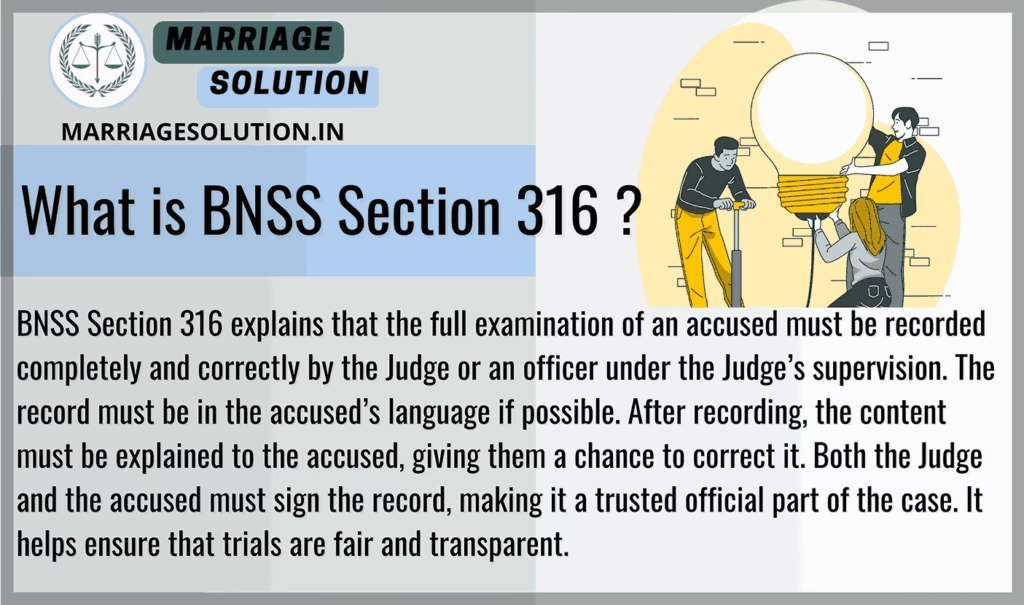
What is BNSS Section 316 ?
BNSS Section 316 explains that the full examination of an accused must be recorded completely and correctly by the Judge or an officer under the Judge’s supervision. The record must be in the accused’s language if possible. After recording, the content must be explained to the accused, giving them a chance to correct it. Both the Judge and the accused must sign the record, making it a trusted official part of the case. It helps ensure that trials are fair and transparent.
BNSS Section of 316 in Simple Points
1. Complete Recording of Examination
BNSS Section 316 says that when an accused is questioned by a Magistrate or Court of Session, the entire conversation must be recorded in full. Every single question asked by the Judge and every answer given by the accused should be written exactly as spoken. This makes sure that no part of the conversation is missed or changed. It protects the rights of the accused and ensures that the court uses accurate information to decide the case.
2. Supervision by the Judge or Magistrate
Normally, the Judge or Magistrate should record the conversation themselves. But if they cannot do so because of health issues or other valid reasons, they can ask a court officer to record it under their supervision. The Judge must still make sure that everything is correct. This rule helps courts continue work efficiently even when the Judge is unable to write, while keeping the process fair and official.
3. Language of the Record
BNSS 316 also explains that the record of the examination should be in the language of the accused, if possible. If that’s not practical, then it should be in the language of the court. This ensures that the accused understands everything being recorded about them. The goal is fairness and clarity. If the accused doesn’t understand the record, it must be explained or translated clearly to give them a proper chance to respond.
4. Showing, Explaining, and Signing the Record
After writing the full examination, the record must be read or shown to the accused in open court. If the accused does not understand the language, it must be explained in a language they know. The accused can correct or explain anything they said, making sure their side of the story is fully recorded. Finally, both the accused and the Judge must sign the record, making it an official part of the trial.
5. Special Provision for Electronic Hearings
BNSS Section 316 also covers cases where the accused is examined through electronic means, like video conferencing. In such cases, the accused’s signature must be taken within 72 hours of the examination. This rule keeps up with modern court processes, making sure that fairness is maintained even when the accused is not physically in court. It also shows that Indian courts are ready to work with modern technology while following fair procedures.
316 BNSS Overview
BNSS 316 provides a step-by-step process for recording the examination of an accused in court. It says that the Judge or Magistrate must record the full conversation, including questions and answers. The record should be in the language of the accused if possible, or in the court’s language. After recording, it must be read or shown to the accused, who can correct or add explanations. The accused and the Judge must both sign it, making it an official document for court records.
10 Key Points of BNSS Section 316
1. Complete Recording of Questions and Answers
BNSS 316 requires that the entire examination of the accused should be recorded fully. This includes every question asked by the Judge and every answer given by the accused. Nothing should be skipped or summarised; the full conversation must be written down. This gives an exact account of what was said by both sides. Recording everything protects both the rights of the accused and the fairness of the trial. It helps avoid misunderstandings later.
2. Recorded by Judge or Under Direction
Normally, the presiding Judge or Magistrate should write this record themselves. But sometimes due to health issues or other problems, they might not be able to do it. In such cases, the Judge can direct a court officer to write the record under their supervision. This ensures that even when the Judge cannot write directly, the accuracy of the record is not compromised. The Judge must still be present and responsible for the content.
3. Language of the Record
BNSS Section 316 says that the record should ideally be in the language spoken by the accused. If that is not possible, then it must be written in the language of the court. The main goal is to make sure that the accused fully understands the content of their examination. Using the right language protects the accused’s right to defend themselves clearly. This provision makes sure that language barriers do not lead to unfairness.
4. Showing and Explaining the Record to the Accused
After the examination is completed, the record must be shown or read to the accused. If the accused does not know the language used, it must be explained to them in a language they understand. This is a very important step to ensure that the accused knows exactly what has been recorded. They are also given a chance to correct, clarify, or add explanations to their statements, which makes the process fair and complete.
5. Signing the Record by Accused and Judge
Once the record is completed and explained, both the accused and the Judge must sign it. The Judge must also give a signed certificate confirming that the examination was conducted fairly in their presence, and that the record is complete and true. This formal signing makes the record official and reliable. Without signatures, the record would not be valid in the eyes of the court.
6. Provision for Electronic Communication
BNSS 316 also includes a provision for cases where the accused is examined through electronic means, such as video conferencing. In such situations, the accused’s signature on the record must be taken within 72 hours of the examination. This ensures that electronic communication does not create gaps in the court process. The accused still gets a fair chance to confirm their statement, even if they were not physically present in court.
7. Summary Trials Are Exempted
One important point of BNSS 316 is that it does not apply to summary trials. Summary trials are quicker and are usually for less serious offences. They follow a simplified procedure to save court time. Therefore, the full detailed recording of questions and answers is not required in such cases. This rule makes sure that smaller cases are handled faster, while serious cases get the full recording process.
8. Protection of Accused’s Rights
BNSS 316 plays a major role in protecting the rights of the accused. By fully recording everything and making sure that the accused understands it, the court makes sure that nothing is hidden or misrepresented. This full and true record can protect the accused from false charges or mistakes later in the trial. It also helps the court make fair decisions based on a clear and complete record.
9. Helps in Appeals and Higher Courts
If a case is later challenged in a higher court, the full record of the accused’s examination becomes very important. It allows appeal courts to see exactly what was said by the accused during the trial. This helps avoid confusion or claims of unfairness. The higher court can decide the case with full confidence, knowing that the accused had a fair chance to speak and clarify. BNSS 316 helps build a strong case record for justice.
10. Supports Fairness in Criminal Trials
BNSS 316 ensures that criminal trials are conducted fairly for both sides. It protects the rights of the accused by providing a clear and reliable record of their examination, while also protecting the court from claims of unfairness. This balance is essential to maintain the trust of the public in the justice system. Without proper recording of statements, trials could be doubted. With BNSS 316, the legal process becomes more transparent and just.
Example 1:
An accused is questioned in Hindi, and the Judge records every question and answer in Hindi. After the examination, the Judge reads the entire record to the accused, who agrees that it is correct. Both sign the record, making it official for the court file.
Example 2:
In an online court hearing, an accused gives answers via video call. The Judge directs a court officer to record the full examination. The accused’s signature is taken within 72 hours after the video hearing, completing the process under BNSS 316.
BNSS Section 316 Short Information
| Point | Details |
|---|---|
| Section Name | BNSS Section 316 |
| Main Rule | Complete recording of every question and answer during the accused’s examination. |
| Language | Record should be in the accused’s language, or if not possible, in the court’s language. |
| Signature Requirement | Record must be shown/explained and then signed by both the accused and the Judge. |
| Special Rule | If recorded via video conferencing, the accused must sign within 72 hours. |
BNSS Section 316 FAQs
BNSS 316
Conclusion
BNSS Section 316 ensures that the accused’s examination is recorded fully and accurately, in a language they understand, and verified by their signature. This protects fairness, prevents misunderstandings, and supports strong and transparent criminal trials.
Need Legal Support?
If you are dealing with court cases, marriage problems, or any other legal issue, our team at Marriage Solution – Lawyer Help is here for you. Simply fill out our quick online enquiry form, and we’ll connect you with the right legal expert to support your needs .
Finished with BNSS Section 316 ? Continue reading the next sections of the Bharatiya Nagarik Suraksha Sanhita (BNSS), 2023. Each section is explained in easy words, with simple examples, so anyone can understand it clearly.
- Section 317 BNSS : Interpreter required to translate evidence faithfully and truly .
- Section 318 BNSS : Recording Evidence in High Court Trials .
- Section 319 BNSS : Cases where personal presence of witness can be avoided and commission may be ordered.
- Section 320 BNSS : Commission to whom to be issued .
Full BNSS Section List: https://marriagesolution.in/bnss_section-list/
Full BNS Section List: https://marriagesolution.in/bharatiya-nyaya-sanhita-section-list/
Full IPC Section List: https://marriagesolution.in/ipc-section-list
All Indian Law & Blogs: https://marriagesolution.in/indian-law/
Need Legal Help? Speak to an Experienced Lawyer Now.

Right to Information RTI act :Your Comprehensive Guide (Part 1)
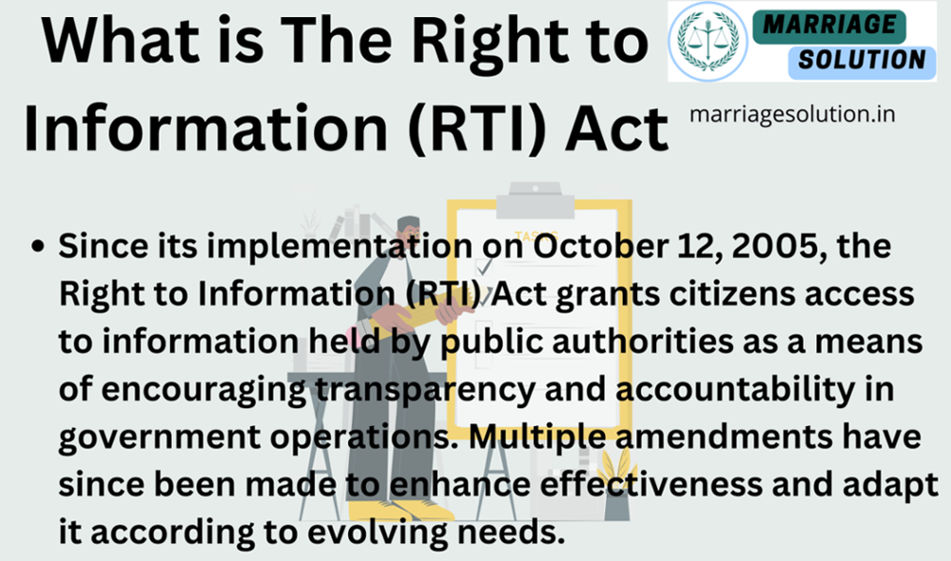
The Right to Information (RTI) Act : Explore the essence of the Right to Information (RTI) Act through this symbolic image. The image features legal documents, emphasizing the importance of transparency and accountability in governance. The scales of justice represent…

What is Article 371 of Indian Constitution ?
Article 371 of the Indian Constitution grants special provisions to specific states and regions within India, addressing their unique historical, social, and cultural circumstances. These provisions aim to accommodate diverse needs and protect cultural identities within the constitutional framework.
Indian Labour law : Your Comprehensive Guide (Part 1)
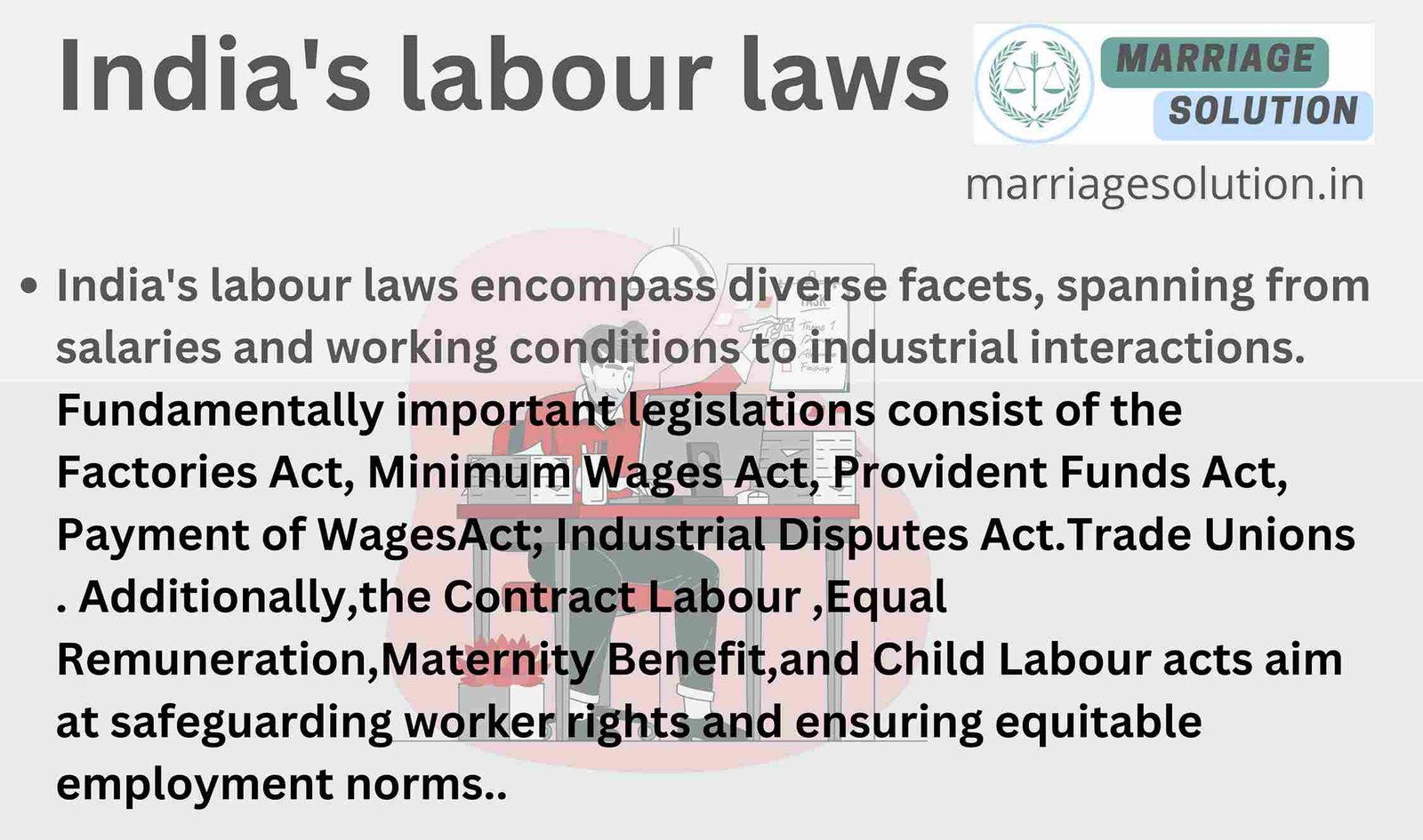
The purpose of labour laws is to safeguard employees and guarantee equitable treatment at the workplace, encompassing aspects such as remuneration, security, and perks. These regulations establish a secure ambiance by imposing minimum wage requirements, ensuring factory safety measures are…
GST :Your Comprehensive Guide (Part 1 – Understanding the Basics)
The Goods and Services Tax (GST) is like a big change in how we pay taxes in India. It started on July 1, 2017, and it’s here to simplify things. Before GST, we had many different taxes, and it could…