
Introduction to Section 347 BNSS
Section 347 BNSS deals with the power of local inspection granted to judges and magistrates during criminal trials or inquiries. It allows them to personally visit a place related to a crime to understand facts clearly. This power ensures that justice is based on direct observations and not just on verbal or written evidence. It promotes fairness, clarity, and accuracy in legal proceedings.
What is BNSS Section 347 ?
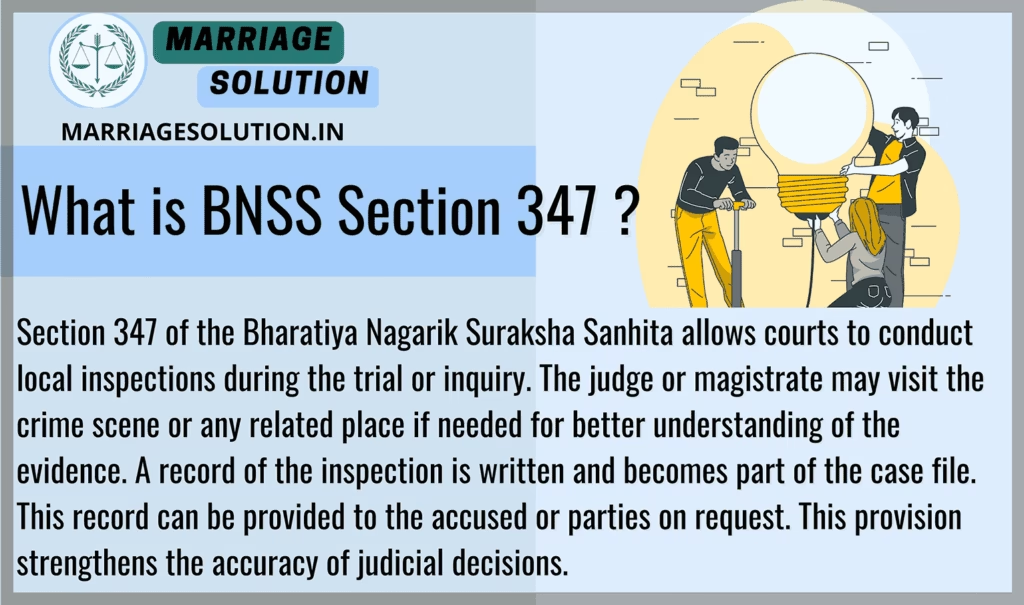
Section 347 of the Bharatiya Nagarik Suraksha Sanhita allows courts to conduct local inspections during the trial or inquiry. The judge or magistrate may visit the crime scene or any related place if needed for better understanding of the evidence. A record of the inspection is written and becomes part of the case file. This record can be provided to the accused or parties on request. This provision strengthens the accuracy of judicial decisions.
BNSS Section of 347 in Simple Points
1. Power of Local Inspection
BNSS 347 empowers any judge or magistrate to conduct a local inspection of a place connected with the offence. This inspection can take place during any stage of inquiry, trial, or proceeding. The main aim is to help the judge better understand the facts or evidence presented in court. The visit can be of the crime scene or any other location relevant to the matter. This power gives the judiciary direct access to the physical environment of the case. Such real-time assessment can reduce dependency on potentially misleading descriptions. It builds a more accurate and fair trial process.
2. Prior Notice Requirement
Before visiting a location, the judge or magistrate must issue prior notice to all parties involved in the case. This includes the prosecution, the accused, and their respective lawyers. This ensures transparency in the judicial process and gives all parties a chance to witness the inspection. The goal is to maintain fairness and avoid any claims of bias. No party should be left out of the process, and all should have equal opportunity to raise questions or objections. This notice is a safeguard for the rights of the accused and all stakeholders.
3. Written Memorandum of Observation
After conducting the inspection, the court must prepare a written memorandum of any relevant facts observed. This record becomes an official part of the case file. It includes details such as location conditions, distances, physical structures, or other visual clues important to the case. This written note helps both the judge and the parties refer back to the actual scene observations during final judgment. It also promotes transparency and strengthens the evidence for appeals if needed. Without this memo, the inspection would lack legal clarity.
4. Right to Get a Copy
BNSS 347 ensures that any party in the case—prosecutor, complainant, or accused—has the right to request and receive a copy of the inspection memorandum. This copy must be given free of cost. It helps the parties prepare arguments or counterpoints based on the court’s observations. This right is crucial for a fair trial and balances the power of the court with the rights of the accused and victims. It also supports legal transparency and builds trust in judicial proceedings. Accessibility to such documents is a vital part of the rule of law.
5. Strengthens Evidence Evaluation
The main benefit of BNSS 347 is that it helps the court directly examine the physical facts of the case. It allows the judge to verify or reject claims made during the trial based on actual site conditions. For example, visibility, distance, or object placement can be evaluated better through direct observation. This reduces chances of false statements or misinterpretation of facts. It ensures the judge does not rely solely on verbal or documentary evidence. Ultimately, it contributes to a more just and informed final verdict.
347 BNSS Overview
BNSS Section 347 gives authority to a judge or magistrate to inspect the crime scene or any other relevant place during trial or inquiry. The court must give prior notice to all parties and record any observations made during the visit. A written memorandum is created and can be shared with all parties free of cost. This section helps in evaluating evidence better by allowing courts to personally observe locations relevant to the case.
BNSS Section 347 – 10 Key Points
1. Power of Local Inspection by the Court
BNSS Section 347 allows a Judge or Magistrate to personally visit and inspect a location related to a crime. This power can be exercised at any stage of inquiry, trial, or proceeding. The purpose is to physically examine the scene where the offence occurred or any place that helps in understanding the case. This provision ensures that the court is not completely dependent on photographs, maps, or verbal descriptions. Personal observation adds authenticity to the evidence. It helps the judge assess the accuracy and relevance of the witness statements. Such inspections must be done after notifying all parties involved.
2. Stage of Inspection – At Any Point of Proceedings
One of the biggest advantages of Section 347 is that inspection can happen at any point during the case – be it inquiry, trial, or even other proceedings. This flexibility allows courts to act quickly when confusion arises about a location or scene. For example, if the testimonies are contradictory regarding where something happened, the judge can personally visit to clarify. This real-time understanding of the scene helps the judge make fact-based decisions. It also ensures that all elements of the case are viewed in the right context.
3. Requirement of Notice to All Parties
Before carrying out any local inspection, the law clearly states that due notice must be given to all parties involved – including the prosecutor, the accused, and the complainant. This ensures fairness and transparency in the inspection process. Every side should have an equal opportunity to be present and observe what the judge sees. This step prevents biased or one-sided observations and upholds the principles of natural justice. The involvement of all parties during the visit increases trust in the findings of the court.
4. Memorandum of Facts Must Be Recorded
After the inspection is completed, the judge or magistrate must quickly write a memorandum describing the important facts noticed during the visit. This written note becomes part of the official record of the case. It ensures that the observations made during the visit are preserved for future reference. This memorandum may influence the final decision, as it reflects the judge’s direct understanding. It should be made without unnecessary delay so that the details remain fresh and accurate.
5. Memorandum Must Be Shared If Requested
If the prosecutor, complainant, accused, or any other party requests a copy of the memorandum, it must be given free of cost. This promotes transparency and gives all parties equal access to information that might affect the outcome of the case. Sharing this memorandum also gives the parties an opportunity to raise objections or ask questions if they believe the inspection was incorrect or incomplete. The provision ensures that the inspection process is open and accountable.
6. Promotes Better Understanding of Evidence
One major reason why BNSS Section 347 is important is that it helps the judge visualize the crime scene or other crucial locations. This real-time visit clears confusion that may arise from photos, maps, or inconsistent witness statements. It supports the judge in assessing distance, angles, visibility, or timelines that may not be obvious in documents. Ultimately, the goal is to reach the truth more effectively, and physical inspection helps in making the evidence more reliable and understandable.
7. Protects the Rights of the Accused and Parties
By mandating notice and optional copies of the memorandum to all parties, Section 347 protects the legal rights of everyone involved. It prevents secret inspections or hidden findings from influencing a case. It allows all stakeholders to question, comment, or clarify the court’s observations if necessary. This aligns with the Indian legal system’s goal of fairness and transparency. Justice is not only about punishment but also about giving all parties a fair chance to be heard and seen.
8. Applicable to All Types of Courts and Offences
BNSS 347 is not limited to a particular type of court or offence. Whether it’s a Sessions Court or a Magistrate’s Court, any Judge or Magistrate can use this power if they believe a local visit is required. This makes the law flexible and applicable to all types of criminal trials, big or small. It also ensures that even in complex or minor cases, judges can personally intervene when clarity is needed. This universal application makes Section 347 very practical and inclusive.
9. Helps Prevent Misleading Evidence
Sometimes, parties to the case may try to mislead the court using fake maps, photos, or witness statements. But when the court exercises its power under BNSS 347, it can immediately detect inconsistencies by personally observing the scene. This makes it difficult for anyone to manipulate the case. It reduces chances of injustice due to fabricated evidence. It also discourages parties from trying to create false narratives, knowing that the judge might physically verify the truth.
10. Ensures Speedy and Clear Justice
The process of local inspection adds to the efficiency and accuracy of the judicial system. When judges directly witness the location of the incident, it reduces dependence on repeated hearings or debates. It gives clarity in a single visit and helps resolve factual disputes faster. This leads to quicker judgments, reducing the burden on the court. BNSS 347 is a powerful tool that supports truth, speed, and clarity in the delivery of justice.
Example 1:
During a murder trial, the judge visits the alley where the incident took place to understand if the accused could have realistically committed the crime within the given time frame. This helps verify the testimonies of the eyewitnesses.
Example 2:
In a land dispute involving criminal trespass, the magistrate visits the location in question to check the boundary lines and actual usage of land before deciding on the case based on local inspection observations.
BNSS Section 347 Short Information
| Point | Details |
|---|---|
| Section Name | BNSS Section 347 |
| Power of Local Inspection | Judge or Magistrate may inspect any place related to the offence during inquiry, trial, or proceedings. |
| Notice Requirement | Prior notice must be given to prosecution, accused, complainant, and lawyers before inspection. |
| Written Memorandum | Court must record a written memo of all observations made during the inspection. |
| Right to Copy | Any party may request a free copy of the inspection memorandum for their defence or arguments. |
| Purpose | Helps judge verify physical facts, reduce misinterpretation, and strengthen evidence evaluation. |
Why is BNSS 347 Needed?
BNSS Section 347 is essential to ensure that courts are not limited to just verbal or written submissions. Many times, a physical visit to the crime scene can reveal crucial details—like line of sight, the condition of objects, or positioning of people or things—that cannot be accurately captured in words. This provision allows the judge or magistrate to make informed decisions based on real-world observations. It also builds trust in the judicial process as both parties are notified and involved. In sensitive or complex cases, this section acts as a tool for truth-finding, helping the judge bridge the gap between theory and reality. Without this power, courts would have to rely entirely on possibly biased or incomplete accounts.
BNSS Section 347 FAQs
BNSS 347
Conclusion
BNSS Section 347 allows courts to directly inspect places connected with an offence, ensuring better understanding of facts and reducing reliance on conflicting descriptions. With mandatory notice, a written memorandum, and free access to copies for all parties, the section strengthens transparency and improves evidence accuracy. It supports fair, well-informed, and efficient judicial decision-making.
Need Legal Support?
If you are dealing with court cases, marriage problems, or any other legal issue, our team at Marriage Solution – Lawyer Help is here for you. Simply fill out our quick online enquiry form, and we’ll connect you with the right legal expert to support your needs .
Finished with BNSS Section 347 ? Continue reading the next sections of the Bharatiya Nagarik Suraksha Sanhita (BNSS), 2023. Each section is explained in easy words, with simple examples, so anyone can understand it clearly.
- Section 348 BNSS : Power of Court to Summon or Re-Examine Witnesses.
- Section 349 BNSS : Magistrate’s Power to Order Specimen Samples .
- Section 350 BNSS : Expenses of complainants and witnesses.
- Section 351 BNSS : Court’s Power to Examine the Accused .
Full BNSS Section List: https://marriagesolution.in/bnss_section-list/
Full BNS Section List: https://marriagesolution.in/bharatiya-nyaya-sanhita-section-list/
Full IPC Section List: https://marriagesolution.in/ipc-section-list
All Indian Law & Blogs: https://marriagesolution.in/indian-law/
Need Legal Help? Speak to an Experienced Lawyer Now.

Right to Information RTI act :Your Comprehensive Guide (Part 1)
The Right to Information (RTI) Act : Explore the essence of the Right to Information (RTI) Act through this symbolic image. The image features legal documents, emphasizing the importance of transparency and accountability in governance. The scales of justice represent…

What is Article 371 of Indian Constitution ?
Article 371 of the Indian Constitution grants special provisions to specific states and regions within India, addressing their unique historical, social, and cultural circumstances. These provisions aim to accommodate diverse needs and protect cultural identities within the constitutional framework.
Indian Labour law : Your Comprehensive Guide (Part 1)
The purpose of labour laws is to safeguard employees and guarantee equitable treatment at the workplace, encompassing aspects such as remuneration, security, and perks. These regulations establish a secure ambiance by imposing minimum wage requirements, ensuring factory safety measures are…
GST :Your Comprehensive Guide (Part 1 – Understanding the Basics)
The Goods and Services Tax (GST) is like a big change in how we pay taxes in India. It started on July 1, 2017, and it’s here to simplify things. Before GST, we had many different taxes, and it could…