
Introduction to Section 94 BNSS / Documents and Digital Evidence Are Legally Summoned
Section 94 BNSS is an important part of the legal process in India. It helps law enforcement agencies gather evidence properly by following a legal procedure. Whether it’s a physical paper or a mobile phone with important chats, this section ensures such materials can be requested legally and fairly.
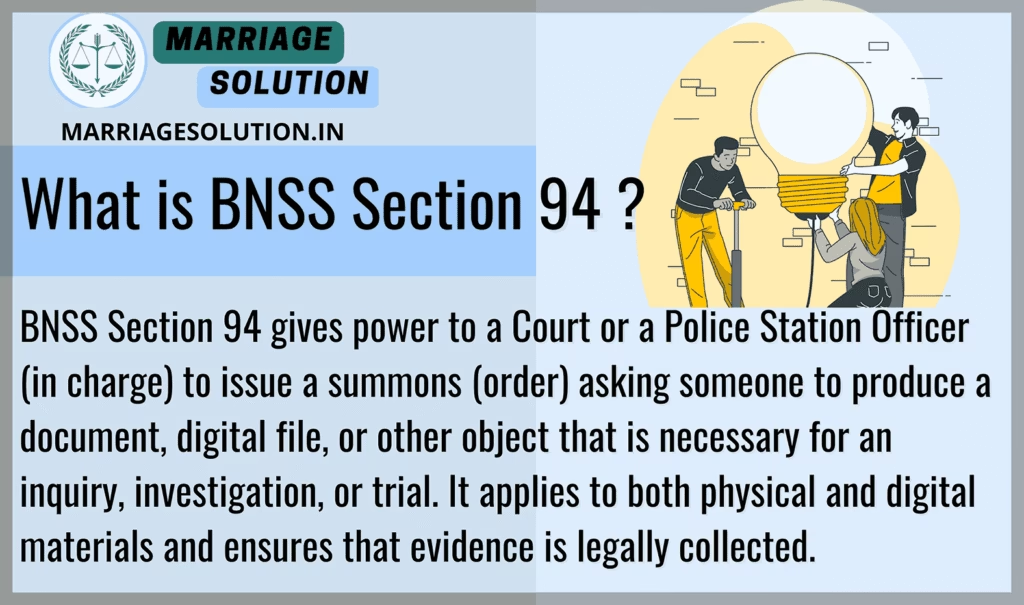
What is BNSS Section 94 ?
BNSS Section 94 gives power to a Court or a Police Station Officer (in charge) to issue a summons (order) asking someone to produce a document, digital file, or other object that is necessary for an inquiry, investigation, or trial. It applies to both physical and digital materials and ensures that evidence is legally collected.
BNSS Section of 94 in Simple Points
1. Power to Ask for Documents or Items
BNSS Section 94 gives power to courts and senior police officers to ask someone to bring or show any document, object, or digital item that may help in a case. This means if they believe something is important for an investigation or trial, they can officially ask for it. The person who receives this order must follow it and give the item as told. It could be a file, a mobile phone, a pen drive, or even printed documents. This rule is very useful in helping the police and court find truth in a case. It makes sure that important evidence doesn’t get hidden or destroyed. The request must be given in writing, either as a court summons or a police officer’s order. This point ensures that evidence is collected legally and properly.
2. Includes Electronic and Digital Evidence
Today, many people use mobile phones, emails, and social media, so crimes often involve digital proof. BNSS Section 94 clearly allows the police or court to ask for electronic items like mobile phones, laptops, hard drives, or online messages. This is helpful in cybercrime, financial fraud, or even murder cases where calls and chats are evidence. Digital items are now treated the same as paper documents. If the officer thinks a digital file is important, they can officially ask for it. The person must then provide the item or data without deleting or hiding it. This makes investigations faster and smarter. The law understands how technology works and uses it to support justice.
3. You Can Send Someone Else with the Item
If someone receives an order to bring a document or item, they don’t always have to go themselves. The law allows them to send someone else or arrange delivery of the item. This is very helpful for people who are busy, unwell, or live far away. For example, a company owner can send their employee with the required documents. The main purpose is to get the item, not to force someone to appear unless really needed. This saves time for both the person and the officers handling the case. But the rule also makes it clear that the item must be delivered on time. This flexibility helps people follow the law in a comfortable way.
4. Some Items Cannot Be Demanded
Even though BNSS Section 94 gives the power to ask for documents, it also protects certain private or special items. For example, communication between a lawyer and their client cannot be asked for under this section. Also, sealed letters, parcels, or items held by the post office are protected. These items have their own legal rules and cannot be taken without following special procedures. This part of the law protects people’s privacy and ensures their rights are not misused. It keeps the legal process fair and balanced. It also prevents police or courts from demanding everything without limits. Only necessary and legal items can be ordered under this law.
5. Helps Collect Evidence in a Legal Way
BNSS Section 94 is a very useful legal tool that helps collect important evidence in a proper and fair manner. It avoids the need for sudden searches or raids and gives people a chance to cooperate with the law. It also creates trust, because everything happens through written legal orders. This section supports both the police and the public by making the process clear and respectful. When people know what is expected and have time to respond, they are more likely to help. The rule also makes sure the legal process does not get delayed due to missing documents. Overall, this section supports justice by making evidence collection simple, respectful, and legal.
Section 94 of BNSS Overview
BNSS Section 94 empowers courts and police to ask individuals to produce documents or objects needed for legal matters. It includes both paper and digital evidence. The section also protects private communications, like lawyer-client talks and postal items. It makes investigations more effective while respecting legal rights.
BNSS Section 94: 10 Key Points Explain
1. Power to Ask for Documents or Items
Courts and police officers can legally ask any person to bring important documents or items. These might be needed for an investigation, trial, or any other legal case. This includes paper records, mobile phones, computers, emails, or anything else that may be used as evidence. The goal is to help solve crimes and present the truth in court. Without this power, many important proofs might be lost or hidden.
2. Applies to Both Digital and Physical Evidence
BNSS Section 94 includes both physical and electronic forms of evidence. This means you may be asked to submit printed files or digital content like messages, emails, or files on a phone or laptop. The law has been updated to suit the modern world, where most information is stored digitally.
3. Court Can Issue Summons
The court can issue a formal letter called a summons asking you to produce a specific document or thing. This paper clearly tells you what you must bring, where you must bring it, and by when. It is a legal order and must be followed properly.
4. Police Can Also Give Written Orders
Not just courts—police officers in charge of a police station also have this power. They can issue a written order asking for necessary documents or items for investigation. This gives police the ability to collect evidence quickly, even before going to court.
5. You Don’t Always Have to Come Yourself
If you receive a summons or written order, you don’t have to appear in person unless it is necessary. You can send the required document or object through someone else. This is helpful for busy people, elderly citizens, or those living far from the police station or court.
6. Use of Electronic Communication
Summons or written orders can be sent via email or other electronic methods, not just by post or hand delivery. This helps save time, especially when evidence needs to be collected quickly or if you live in a different city. It also creates a digital record of the request.
7. Only Necessary Items Can Be Requested
Police and courts cannot ask for anything and everything. They must clearly show that the document or item is important to the case. This rule protects your personal privacy and prevents unnecessary disturbance.
8. Privileged Documents Are Protected
BNSS Section 94 does not allow courts or police to ask for confidential documents like lawyer-client communication. Also, banking records are protected under a different law. This means your private or sensitive communication is safe unless the court has a special reason.
9. Post Office Items Cannot Be Taken
Things that are under the control of the postal department—like letters, parcels, or postcards—cannot be taken using BNSS Section 94. These have special rules under other laws. This helps keep your mail private and secure.
10. Supports Fair Investigation and Justice
The main aim of Section 94 is to help find the truth during investigation and trials. By allowing important documents and objects to be collected properly, it makes sure that no one hides key evidence. It supports both police and courts in working fairly and efficiently.
Examples of BNSS Section 94
Example 1: Requesting CCTV Footage in a Theft Case
A theft happens at a jewelry store. The police suspect someone who was present during the time of the crime. The CCTV footage is stored by a nearby shop. Using BNSS Section 94, the investigating officer issues a written order asking the shop owner to submit the CCTV footage as evidence. The footage later helps identify the thief.
Explanation: This example shows how BNSS Section 94 helps law enforcement legally collect video evidence without force or illegal entry.
Example 2: Digital Evidence in a Cybercrime Case
In a cyberbullying case, a victim complains about threatening messages sent via a messaging app. The police believe the suspect’s phone contains proof. Using BNSS Section 94, the police request the suspect to bring their phone or send it with a representative. This helps gather chat history and screenshots for the investigation.
Explanation: This case shows how digital evidence is collected through a legal order, protecting both investigation integrity and individual rights.
Section 94 of BNSS Short Information
| Key Point | Explanation |
|---|---|
| Legal Power to Request Evidence | Courts and police officers can legally order any person to produce documents, objects, or digital files relevant to a case. |
| Covers Physical and Digital Material | Section 94 applies to both paper documents and electronic evidence like phones, emails, and online messages. |
| Flexible Submission | The person who receives the order can send someone else or arrange delivery of the requested items instead of appearing personally. |
| Protection of Confidential Material | Private communications like lawyer-client discussions and postal items are protected and cannot be demanded without proper legal procedure. |
| Ensures Fair and Legal Evidence Collection | This section ensures evidence is gathered lawfully and transparently, respecting privacy while helping courts find the truth. |
BNSS Section 94 FAQs
BNSS 94
Conclusion
BNSS Section 94 bridges the gap between traditional and digital evidence, ensuring both are collected lawfully and fairly. It empowers courts and police to request important materials that help uncover the truth while maintaining respect for privacy and individual rights. This section modernizes the justice system by recognizing electronic data as valid legal evidence and promotes transparency and accountability in investigations.
Need Legal Support?
If you are dealing with court cases, marriage problems, or any other legal issue, our team at Marriage Solution – Lawyer Help is here for you. Simply fill out our quick online enquiry form, and we’ll connect you with the right legal expert to support your needs .
Finished with BNSS Section 94 ? Continue reading the next sections of the Bharatiya Nagarik Suraksha Sanhita (BNSS), 2023. Each section is explained in easy words, with simple examples, so anyone can understand it clearly.
- Section 95 BNSS : Postal Documents in Legal Investigations .
- Section 96 BNSS: Court Issue a Search Warrant .
- BNSS Section 97 : How Police Can Search Suspected Places Legally .
- Section 98 BNSS : Power to Ban Harmful Publications .
Full BNSS Section List: https://marriagesolution.in/bnss_section-list/
Full BNS Section List: https://marriagesolution.in/bharatiya-nyaya-sanhita-section-list/
Full IPC Section List: https://marriagesolution.in/ipc-section-list
All Indian Law & Blogs: https://marriagesolution.in/indian-law/
Need Legal Help? Speak to an Experienced Lawyer Now.

Right to Information RTI act :Your Comprehensive Guide (Part 1)
The Right to Information (RTI) Act : Explore the essence of the Right to Information (RTI) Act through this symbolic image. The image features legal documents, emphasizing the importance of transparency and accountability in governance. The scales of justice represent…

What is Article 371 of Indian Constitution ?
Article 371 of the Indian Constitution grants special provisions to specific states and regions within India, addressing their unique historical, social, and cultural circumstances. These provisions aim to accommodate diverse needs and protect cultural identities within the constitutional framework.

Indian Labour law : Your Comprehensive Guide (Part 1)
The purpose of labour laws is to safeguard employees and guarantee equitable treatment at the workplace, encompassing aspects such as remuneration, security, and perks. These regulations establish a secure ambiance by imposing minimum wage requirements, ensuring factory safety measures are…
GST :Your Comprehensive Guide (Part 1 – Understanding the Basics)
The Goods and Services Tax (GST) is like a big change in how we pay taxes in India. It started on July 1, 2017, and it’s here to simplify things. Before GST, we had many different taxes, and it could…