
Introduction to Section 274 BNSS
Section 274 BNSS is part of Chapter XXI of the Bharatiya Nagarik Suraksha Sanhita (BNSS), which deals with the trial of summons-cases by Magistrates. This section simplifies the trial process for minor offences by stating that the Magistrate must inform the accused about the offence without needing a formal charge sheet. It helps in faster and fair trials in simple criminal cases.
What is BNSS Section 274?
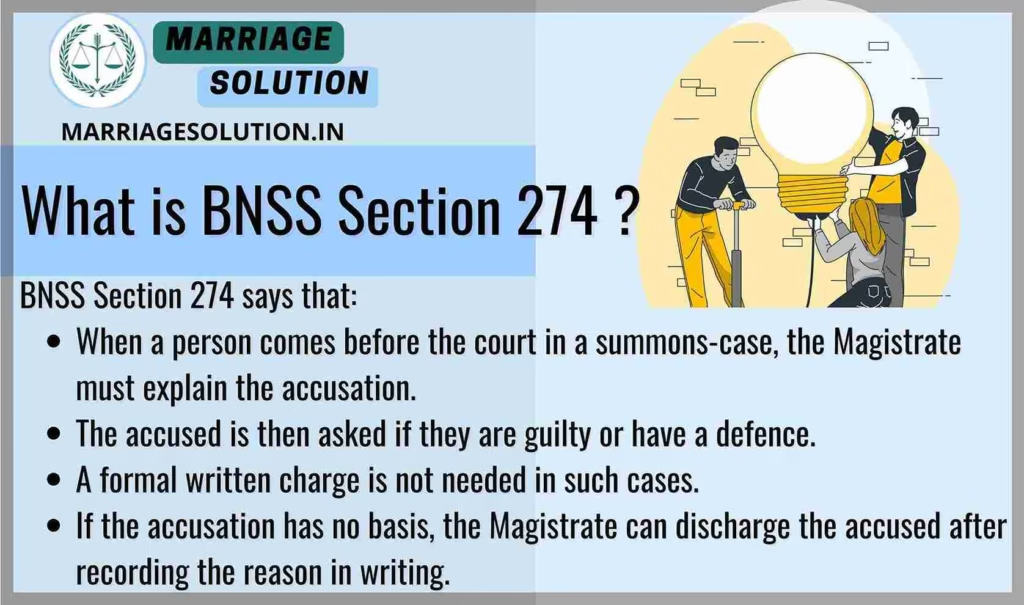
BNSS Section 274 says that:
- When a person comes before the court in a summons-case, the Magistrate must explain the accusation.
- The accused is then asked if they are guilty or have a defence.
- A formal written charge is not needed in such cases.
- If the accusation has no basis, the Magistrate can discharge the accused after recording the reason in writing.
BNSS Section of 274 in Simple Points
1. Applies to Summons-Cases Only
BNSS Section 274 is specially designed for summons-cases, which are small or less serious offences. These may include minor theft, traffic violations, or public nuisance. These cases carry a maximum punishment of two years or less. The law understands that minor cases do not need full-fledged trials like serious crimes. Hence, the section provides a simplified trial process. The purpose is to save time for both the court and the parties involved. It is a step towards faster justice in day-to-day legal matters.
2. Accused Must Be Told the Nature of Offence
As soon as the accused appears before the Magistrate, they must be told exactly what offence they are accused of. This should be done in simple language that the accused can understand. It ensures that the person knows the reason they are in court. The explanation can be oral or written, depending on the Magistrate’s decision. However, it must include all necessary details like section number and facts. This allows the accused to respond properly and prepare their defence if needed. It upholds the right to a fair hearing.
3. No Formal Charge Sheet Required
In summons-cases, there is no need to draft a formal charge like in serious or warrant-cases. Instead, the court only needs to state the offence clearly. This removes unnecessary delays and reduces paperwork. It makes the court process faster and more efficient. The idea is that a simple explanation is enough for the accused to understand the case. This approach is used only for minor cases, not for serious crimes. It helps the judicial system work more smoothly and focus on important matters.
4. Magistrate Can Discharge Accused if Case Is Groundless
If the Magistrate thinks that the complaint has no valid reason, they can release the accused immediately. But before doing so, they must write down the reasons for their decision. This action is called a discharge, not an acquittal. It means the accused is freed from the case, and the matter is closed unless new evidence comes up later. This protects people from being unnecessarily dragged into court. It ensures that the legal system is not misused for false or weak complaints.
5. Speeds Up Trials and Reduces Burden on Courts
One of the biggest benefits of BNSS 274 is that it helps clear minor cases quickly. Since there is no need for a formal charge and trials are short, the burden on the courts is reduced. This helps in resolving petty disputes faster and giving justice without long delays. It also allows the court to focus more on serious and complex criminal matters. BNSS 274 is a smart way to reduce backlog and improve the justice delivery system. It saves time, effort, and resources for everyone involved.
Section 274 of BNSS Overview
BNSS 274 explains that when an accused appears in a summons-case, the Magistrate should state the nature of the offence clearly and ask whether the accused pleads guilty or wants to defend themselves. There is no requirement to frame a formal charge. If the Magistrate feels the complaint is groundless, they must record the reason and release the accused, which will count as a discharge. This saves time and prevents misuse of the legal process.
BNSS Section 274 – 10 Key Points
1. Purpose of the Section
BNSS Section 274 explains the beginning of trial procedures in summons-cases. When an accused person appears before the Magistrate, the Magistrate must clearly inform them about the offence they are being accused of. This process ensures the accused understands what they are being tried for. It helps maintain transparency and fairness in the justice process. The law doesn’t require a detailed or formal written charge in these cases. Just a clear explanation is enough. This makes the process simple and quick for minor offences.
2. Summons-Case Procedure Simplified
In summons-cases, the offences are usually less serious and carry lighter punishments. That’s why the process is kept simple. The accused is only told about the accusation without a formal charge sheet. This saves the court’s time and speeds up justice delivery. The idea is to not complicate things for petty offences. Yet, the accused still gets a chance to defend themselves. BNSS 274 is part of making justice more accessible and faster for common people.
3. Plea of the Accused
After the accusation is stated, the Magistrate must ask the accused whether they plead guilty or not. If the accused pleads guilty, the Magistrate can decide the sentence immediately. If the accused denies the charge or wants to defend themselves, the trial will proceed further. This step is important as it allows the accused to accept responsibility or prepare their side of the case. It respects the accused’s right to speak and defend.
4. No Need for Formal Charge
Unlike more serious warrant-cases, summons-cases do not require a formal written charge to be framed. This helps reduce paperwork and quickens the process. The law recognises that not all cases need the same level of formality. In smaller offences, stating the accusation orally is sufficient. This also makes the process easier to understand for people who are not legally trained. It keeps the justice system user-friendly.
5. Power to Discharge
If the Magistrate finds that the accusation is baseless or has no legal ground, they can discharge the accused immediately. However, the Magistrate must write down the reason for this decision. This prevents misuse of power and ensures accountability. It also protects innocent people from unnecessary trials. This clause upholds the principle of justice by saving individuals from being dragged into false cases.
6. Fairness in Communication
Section 274 ensures that the accused is not left in confusion. The Magistrate must clearly state the details of the offence. This gives the accused a fair chance to understand and respond. It also ensures that there is no hidden agenda or bias. The system becomes more transparent and trustworthy. This supports the larger goal of protecting human rights during criminal proceedings.
7. Efficient Use of Court Resources
By skipping the formal charge framing in simple cases, the courts can handle more cases efficiently. It reduces delays and frees up judicial time for more serious matters. This design reflects a practical approach in the new criminal procedure system. It shows the government’s intent to build a faster, more responsive judicial system.
8. Protection from False Cases
The proviso in Section 274 offers a safety net. If the Magistrate thinks the accusation is groundless, the accused can be released without trial. This ensures that people are not harassed with fake or baseless complaints. It helps build trust in the legal system and discourages misuse of the law. Such protection is a strong pillar of human rights in any fair society.
9. Role of the Magistrate
The entire process under Section 274 relies on the discretion and judgment of the Magistrate. The law gives them the responsibility to judge whether an accusation should lead to trial or discharge. This reflects the faith in judicial wisdom and reinforces the role of the court in safeguarding justice. A well-trained and fair Magistrate is key to implementing this section properly.
10. Foundation of Summons Trial
BNSS Section 274 acts as the foundation of summons-case trials. It marks the first formal step after the accused appears before the court. It sets the tone for what follows—whether plea, trial, or discharge. This section ensures that every accused person is treated with fairness, clarity, and legal safeguards, even in less serious cases. It balances efficiency with justice in the criminal process.
Example 1:
Ravi is caught driving without a valid license. It is a minor (summons) offence. In court, the Magistrate tells Ravi the exact accusation and asks if he pleads guilty. No formal charge is framed. Ravi admits his mistake, and the court gives a small fine. The case ends quickly.
Example 2:
Sunita is accused of causing a minor public disturbance. She appears in court. The Magistrate finds that there is no strong evidence and records the reason. Sunita is released immediately without a trial. This is treated as a discharge under BNSS 274.
Section 274 of BNSS Short Information
| No. | Key Point | Simple Explanation |
|---|---|---|
| 1 | Applies Only to Summons-Cases | This section applies only to minor offences (punishment up to 2 years) handled as summons-cases. |
| 2 | Accused Must Be Told the Offence | When the accused appears, the Magistrate must clearly explain the offence in simple language. |
| 3 | No Formal Charge Required | Summons-cases don’t require a written charge; a simple oral explanation is enough. |
| 4 | Magistrate Can Discharge if Case Is Groundless | If the Magistrate finds the complaint baseless, they may discharge the accused with written reasons. |
| 5 | Faster & Simpler Trial Process | The simplified procedure helps courts finish minor cases quickly and reduce backlog. |
BNSS Section 274 FAQs
BNSS 274
Conclusion
BNSS Section 274 streamlines the trial process in summons-cases by removing the need for a formal charge and requiring only a simple explanation of the offence. It empowers the Magistrate to discharge the accused if the case is weak, saving time and preventing misuse of the legal process. This section ensures quick, fair, and efficient handling of minor offences.
Need Legal Support?
If you are dealing with court cases, marriage problems, or any other legal issue, our team at Marriage Solution – Lawyer Help is here for you. Simply fill out our quick online enquiry form, and we’ll connect you with the right legal expert to support your needs .
Finished with BNSS Section 274 ? Continue reading the next sections of the Bharatiya Nagarik Suraksha Sanhita (BNSS), 2023. Each section is explained in easy words, with simple examples, so anyone can understand it clearly.
- Section 275 BNSS : Conviction on Plea of Guilty Explained .
- Section 276 BNSS : Plea of Guilty Without Going to Court .
- Section 277 BNSS : Procedure When Accused Not Convicted .
- Section 278 BNSS : Acquittal or Conviction Explained .
Full BNSS Section List: https://marriagesolution.in/bnss_section-list/
Full BNS Section List: https://marriagesolution.in/bharatiya-nyaya-sanhita-section-list/
Full IPC Section List: https://marriagesolution.in/ipc-section-list
All Indian Law & Blogs: https://marriagesolution.in/indian-law/
Need Legal Help? Speak to an Experienced Lawyer Now.

Court Marriage in India: Complete Process, Timeline & Inter-Caste Incentives
More couples in India are choosing court marriage over traditional ceremonies every year — whether for simplicity, personal choice, or the legal recognition it provides without the scale of a full wedding. A court marriage is like a legal love…

Right to Information RTI act :Your Comprehensive Guide (Part 1)
The Right to Information (RTI) Act : Explore the essence of the Right to Information (RTI) Act through this symbolic image. The image features legal documents, emphasizing the importance of transparency and accountability in governance. The scales of justice represent…

What is Article 371 of Indian Constitution ?
Article 371 of the Indian Constitution grants special provisions to specific states and regions within India, addressing their unique historical, social, and cultural circumstances. These provisions aim to accommodate diverse needs and protect cultural identities within the constitutional framework.
Indian Labour law : Your Comprehensive Guide (Part 1)
The purpose of labour laws is to safeguard employees and guarantee equitable treatment at the workplace, encompassing aspects such as remuneration, security, and perks. These regulations establish a secure ambiance by imposing minimum wage requirements, ensuring factory safety measures are…