
Introduction to Section 311 BNSS
Section 311 BNSS explains how witness statements must be officially recorded in trials before a Court of Session. These are serious criminal cases like murder, rape, or dacoity. The Judge writes or dictates the evidence, or an officer records it under the Judge’s direct supervision. This rule ensures that all evidence is clear, correct, and part of the official record for the trial. It is designed to maintain fairness and trust in the justice process.
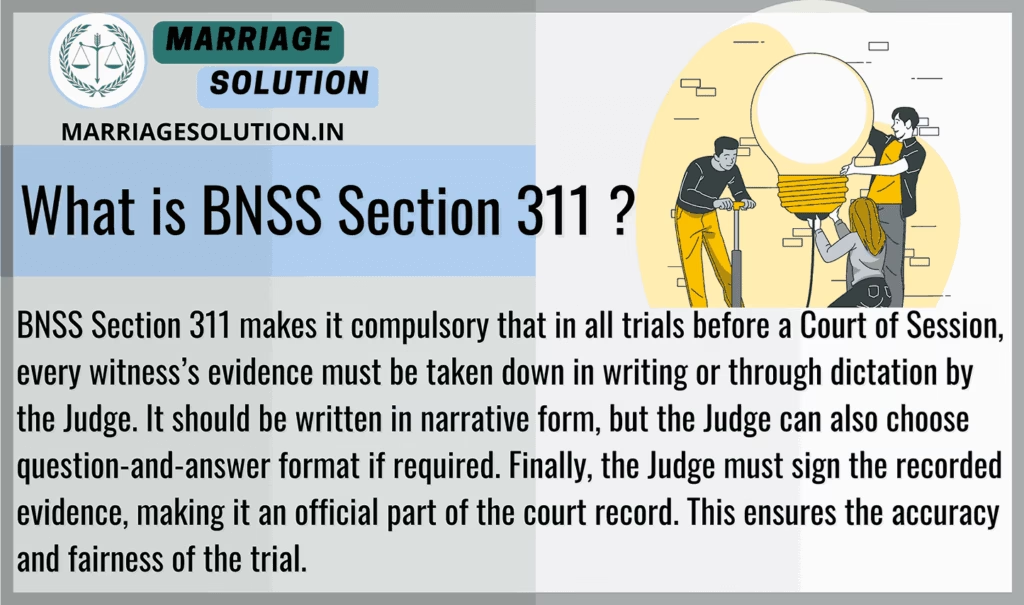
What is BNSS Section 311 ?
BNSS Section 311 makes it compulsory that in all trials before a Court of Session, every witness’s evidence must be taken down in writing or through dictation by the Judge. It should be written in narrative form, but the Judge can also choose question-and-answer format if required. Finally, the Judge must sign the recorded evidence, making it an official part of the court record. This ensures the accuracy and fairness of the trial.
BNSS Section of 311 in Simple Points
1. Applies to Serious Session Trials
BNSS 311 is used in serious criminal cases tried in Courts of Session, like murder, rape, and robbery. These cases often have strict punishments, so having a proper written record of witness statements is very important. The law ensures that every witness’s statement is written down immediately during the trial. It helps courts maintain a clear, honest, and permanent record of what each person said in court.
2. Responsibility of the Judge
As per BNSS 311, the presiding Judge must write or dictate the witness’s evidence during the trial. This process happens openly in court to maintain fairness. If the Judge cannot write it personally, they can allow a court officer to write the statement but only under the Judge’s full supervision. This rule ensures that there is no confusion or chance of the evidence being wrongly written during the trial.
3. Choice of Format for Recording
BNSS Section 311 gives flexibility to the Judge in choosing how to write the statement of a witness. Usually, it is recorded in narrative form, which means writing it like a story or report. But if needed, the Judge can also use a question-and-answer format to make it clearer. This is very useful in complex or sensitive cases, where having each question and answer written helps in understanding the truth better.
4. Signing by the Judge is Mandatory
For any witness statement to become official in the trial, the Judge must sign it personally. Without the signature, the recorded statement cannot be used in court. Signing proves that the Judge agrees that the written record is correct and can be trusted as true. It gives the document its legal authority, making sure the trial’s decisions are based on real and verified evidence.
5. Becomes a Permanent Part of the Trial Record
After it is recorded and signed, the witness’s evidence becomes a permanent part of the court’s official record. This official record is used by the court to make final decisions in the trial. It is also used if the case is taken to a higher court for appeal. Having a clear, signed record makes it easier to review the case fairly in the future. BNSS 311 helps courts keep the justice system fair, honest, and complete.
311 BNSS Overview
BNSS 311 is a rule made to keep the process of evidence recording in serious criminal cases transparent and official. The Sessions Court Judge must write or dictate each witness’s statement as they speak. If the Judge can’t write, a court officer can record it under their close supervision. This section makes sure that there is a permanent, trustworthy record of what each witness said in court. It is a must for fair judgments.
10 Key Points of BNSS Section 311
1. Applies to Trials in Court of Session
BNSS Section 311 is specifically for trials conducted in Courts of Session, which handle serious criminal cases like murder, rape, robbery, and other grave offences. Recording the evidence properly is extremely important in these cases. Every witness’s statement must be written as they speak. This ensures that the court maintains a clear, accurate, and permanent record for use in judgments, appeals, and legal reviews.
2. Presiding Judge Records the Evidence
The presiding Judge is responsible for writing or dictating the witness’s evidence. If the Judge does not personally write it, they can dictate it openly in court. This maintains the honesty and fairness of the process because the statement is being recorded under the direct control of the Judge. The Judge’s active role ensures that no part of the witness’s testimony is left out or altered by mistake or intention.
3. Officer of the Court Can Write Evidence
If needed, the Judge can also appoint a court officer to record the evidence under the Judge’s supervision. This is allowed in cases where writing or dictating might be difficult or time-consuming for the Judge. However, even in this case, the Judge must supervise the process closely to make sure that the record is correct. This ensures that there is no chance of false recording or mistakes during the trial process.
4. Recording Format: Narrative or Question-Answer
The normal method of recording is in narrative form, meaning the witness’s story is written like a continuous explanation. However, if the Judge thinks it’s necessary for better clarity, they may choose to write the evidence in a question-and-answer format. This makes complicated or disputed parts of the testimony easier to follow. It also helps during cross-examinations or appeals where specific questions and responses are important.
5. Signature of the Presiding Judge Required
After recording the evidence, the presiding Judge must sign the document. Without the Judge’s signature, the written evidence does not have any official value in the court. This signature shows that the Judge approves and verifies that the recorded evidence is true and correct. It gives the document its legal authority and helps protect the rights of both the accused and the witnesses involved in the trial.
6. Becomes Part of the Official Record
Once the evidence is recorded and signed by the Judge, it officially becomes part of the court record. This recorded evidence will be used by both the prosecution and the defence lawyers during the trial. It also becomes important if the case is taken to higher courts for appeals. Keeping this as an official record ensures that there is no confusion or tampering with the witness statements in the future.
7. Ensures Fairness in Serious Cases
Trials in Courts of Session often involve serious allegations and strict punishments, including life imprisonment or even the death penalty in rare cases. That’s why it is necessary to record evidence honestly and carefully. BNSS Section 311 makes sure that witness statements are captured properly so that the judge’s final decision is based on accurate facts. This maintains fairness for both victims and accused persons.
8. Helps in Appeals and Reviews
One of the most important uses of properly recorded evidence is in appeals and legal reviews. If the Sessions Court decision is challenged in a High Court or Supreme Court, the recorded statements will be the main reference. If the evidence is complete, signed, and clear, it helps the higher courts understand exactly what happened in the trial. This increases confidence in the fairness of the justice system.
9. Builds Public Trust in the Legal Process
Recording witness statements in open court under the supervision of a respected Sessions Judge builds public confidence in the legal system. People feel assured that serious criminal cases are handled carefully and fairly. The process is open, documented, and official, meaning that no hidden or secret decisions can be made. BNSS 311 strengthens the overall trust of citizens in the Indian courts.
10. Supports Strong, Transparent Justice
BNSS Section 311 supports the overall goal of the BNSS, which is to create a modern, fair, and transparent legal system in India. By making sure that witness evidence is recorded officially in the correct manner, the law ensures that both sides of the case are treated equally and fairly. This section plays a key role in delivering justice to victims of crime while protecting the legal rights of accused persons during trials.
Example 1:
In a murder trial, the key eyewitness describes what they saw. The Judge dictates the witness’s words openly in court, and the statement is written and signed. This becomes the official evidence for the case.
Example 2:
In a rape trial, the Judge finds it better to record the testimony in question-and-answer form for clarity. The evidence is written, signed, and added to the official court record, ensuring no tampering or confusion later.
BNSS Section 311 Short Information
| No. | Key Point | Simple Explanation |
|---|---|---|
| 1 | Used in serious Session trials | Applies to major criminal cases in Court of Session where accurate evidence recording is essential. |
| 2 | Judge records evidence | The Judge must write or dictate witness statements in open court for fairness and accuracy. |
| 3 | Flexible format | Evidence may be written in narrative form or question-answer format depending on case needs. |
| 4 | Judge’s signature required | The Judge must sign the recorded evidence; without signature it is not legally valid. |
| 5 | Becomes official record | Signed statements become part of the permanent case file used in judgments and appeals. |
BNSS Section 311 FAQs
BNSS 311
Conclusion
BNSS Section 311 ensures that evidence in serious criminal trials is recorded directly under the Judge’s control, in open court, and in a legally valid format. Once signed, the statement becomes a permanent and trusted part of the case record, helping deliver fair judgments and supporting appeal processes with clarity and accuracy.
Need Legal Support?
If you are dealing with court cases, marriage problems, or any other legal issue, our team at Marriage Solution – Lawyer Help is here for you. Simply fill out our quick online enquiry form, and we’ll connect you with the right legal expert to support your needs .
Finished with BNSS Section 311 ? Continue reading the next sections of the Bharatiya Nagarik Suraksha Sanhita (BNSS), 2023. Each section is explained in easy words, with simple examples, so anyone can understand it clearly.
- Section 312 BNSS : Language of Witness Evidence in Court Trials.
- Section 313 BNSS :Procedure for Finalizing Recorded Evidence .
- Section 314 BNSS : Interpretation of evidence to accused or Advocate.
- Section 315 BNSS : Remarks on Witness Behaviour in Trials .
Full BNSS Section List: https://marriagesolution.in/bnss_section-list/
Full BNS Section List: https://marriagesolution.in/bharatiya-nyaya-sanhita-section-list/
Full IPC Section List: https://marriagesolution.in/ipc-section-list
All Indian Law & Blogs: https://marriagesolution.in/indian-law/
Need Legal Help? Speak to an Experienced Lawyer Now.

Right to Information RTI act :Your Comprehensive Guide (Part 1)
The Right to Information (RTI) Act : Explore the essence of the Right to Information (RTI) Act through this symbolic image. The image features legal documents, emphasizing the importance of transparency and accountability in governance. The scales of justice represent…

What is Article 371 of Indian Constitution ?
Article 371 of the Indian Constitution grants special provisions to specific states and regions within India, addressing their unique historical, social, and cultural circumstances. These provisions aim to accommodate diverse needs and protect cultural identities within the constitutional framework.
Indian Labour law : Your Comprehensive Guide (Part 1)
The purpose of labour laws is to safeguard employees and guarantee equitable treatment at the workplace, encompassing aspects such as remuneration, security, and perks. These regulations establish a secure ambiance by imposing minimum wage requirements, ensuring factory safety measures are…

GST :Your Comprehensive Guide (Part 1 – Understanding the Basics)
The Goods and Services Tax (GST) is like a big change in how we pay taxes in India. It started on July 1, 2017, and it’s here to simplify things. Before GST, we had many different taxes, and it could…