
Introduction to Section 327 BNSS
Section 327 BNSS is an important part of the Bharatiya Nagarik Suraksha Sanhita, 2023. It explains how identification reports prepared by an Executive Magistrate can be used as legal evidence in court. This helps courts confirm the identity of persons or property involved in criminal cases. It also saves time by not requiring the Magistrate’s presence unless necessary. BNSS 327 helps in faster delivery of justice while ensuring fairness.
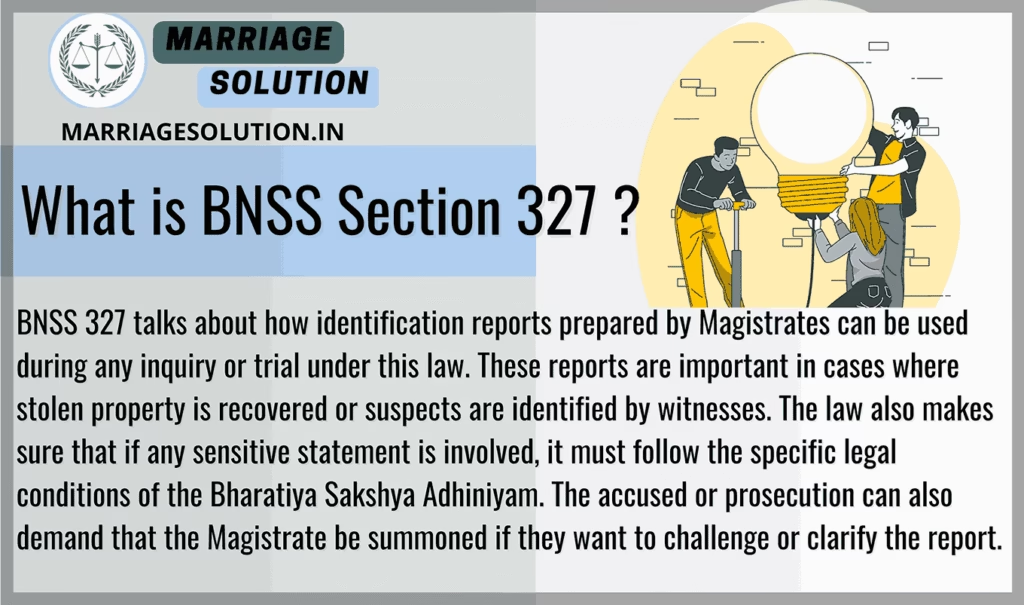
What is BNSS Section 327 ?
BNSS 327 talks about how identification reports prepared by Magistrates can be used during any inquiry or trial under this law. These reports are important in cases where stolen property is recovered or suspects are identified by witnesses. The law also makes sure that if any sensitive statement is involved, it must follow the specific legal conditions of the Bharatiya Sakshya Adhiniyam. The accused or prosecution can also demand that the Magistrate be summoned if they want to challenge or clarify the report.
BNSS Section of 327 in Simple Points
1) Use of Identification Reports as Evidence
BNSS Section 327 permits identification reports created by Executive Magistrates to be used as evidence in criminal cases. These reports help in identifying persons or property connected with the offence. The reports are admissible even if the Magistrate who prepared them is not present in court. This provision simplifies the process and avoids delays. It helps courts rely on official documents instead of summoning officials unnecessarily. However, parties can request the Magistrate to appear if needed. This balance ensures fair and efficient trials.
2) Legal Safeguards for Statements
BNSS 327 contains a proviso to protect the rights of the accused and witnesses. If the report contains a statement by a suspect or witness, that part of the report must comply with the Bharatiya Sakshya Adhiniyam, 2023. These special provisions apply to prevent misuse of evidence. For example, confessional statements must follow strict guidelines. This ensures that no statement is used unfairly or without legal safeguards. Thus, BNSS 327 protects both justice and individual rights.
3) Right to Summon the Magistrate
Even though the identification report can be used without the Magistrate present, BNSS 327 gives both the prosecution and the accused the right to ask for the Magistrate’s presence. The court must call the Magistrate if requested by either party. This right allows the parties to ask questions about how the identification was conducted. It maintains fairness by giving both sides a chance to test the truthfulness of the evidence. This ensures that the identification process remains transparent and credible.
4) Importance in Criminal Trials
Identification reports play a critical role in cases like theft, robbery, or murder, where the identification of property or suspects is essential. By allowing such reports as evidence, BNSS 327 saves the court’s time. Instead of calling the Magistrate in every case, courts can proceed faster using written evidence. However, if there is doubt, the court can summon the Magistrate for clarification. This system improves the efficiency of criminal justice while still protecting the accused’s rights.
5) Practical Use in Day-to-Day Cases
In real court cases, BNSS 327 is regularly used during identification parades for suspects or property. For example, in cases of chain snatching or mobile theft, the police recover stolen items and show them to the owner in front of a Magistrate. The Magistrate’s report is submitted to the court. This process makes sure the identification is official and reliable. Such procedures, supported by BNSS 327, ensure smooth court functioning and protect the rights of victims, accused, and witnesses.
327 BNSS Overview
BNSS 327 ensures that when an Executive Magistrate prepares an identification report, that document is accepted in court as evidence, even if the Magistrate is not present. However, if the report contains important statements by witnesses or suspects, it must follow the rules of the Bharatiya Sakshya Adhiniyam, 2023. If the accused or prosecution wants to question the report, they can request the court to call the Magistrate for cross-examination. This keeps the process both fair and efficient.
BNSS Section 327 – Identification Report of Magistrate : 10 Key Points
1. Meaning of Identification Report of Magistrate
BNSS Section 327 talks about the identification report prepared by an Executive Magistrate regarding a person or property. This report is an official document that can be used as evidence in court. It helps to confirm the identity of suspects, stolen goods, or property involved in a crime. The law gives special value to such reports because they are prepared under the authority of the law. Even if the Magistrate is not called to the court, the report is still accepted. This helps save time and gives proper legal strength to the evidence collected.
2. Legal Status of Identification Reports
As per BNSS 327, these identification reports are considered valid evidence even if the Executive Magistrate who prepared them does not appear in court. These reports have the presumption of correctness because they are made during official proceedings. However, the law also gives flexibility—if required by the court or either party, the Magistrate can be summoned. This provision ensures that the truth and fairness of the report can be tested when necessary. Courts use these reports mainly in theft cases, murder investigations, or property disputes.
3. Conditions for Using Such Reports
While BNSS 327 allows these reports to be used as evidence, there are important conditions attached. If the identification report contains any statement made by a suspect or witness, then the rules of Bharatiya Sakshya Adhiniyam (BSA) Sections 19, 26, 27, 158, or 160 will apply. These sections cover confessions, admissions, and other sensitive statements. The court will only accept such statements if they meet the specific legal standards of BSA 2023. This ensures that only fair and verified evidence is used in trials. It prevents misuse of power and protects the rights of the accused.
4. Right to Call the Magistrate for Cross-Examination
BNSS 327 also protects the rights of the accused and the prosecution. If the accused or prosecution feels that the identification report may have errors or needs clarification, they can request the court to summon the Executive Magistrate. The court must call the Magistrate if such a request is made by either party. This allows both sides to ask questions and clarify doubts related to the report. It strengthens the fairness of trials by ensuring open examination of official documents. This keeps the balance between speedy justice and fair trials.
5. Helps in Faster Delivery of Justice
The main goal of BNSS 327 is to reduce delays in criminal cases. Magistrates often prepare many identification reports, and calling them every time in court may lead to delays. By allowing the report itself to be used as evidence, the court can save time without sacrificing fairness. Only when necessary does the court summon the Magistrate for questioning. This helps the legal system focus on speedy disposal of cases, particularly those involving multiple witnesses or stolen goods. BNSS 327 ensures that the process remains fair, but not slow.
6. Importance in Property and Theft Cases
In many theft, robbery, and fraud cases, identification of property becomes important. BNSS 327 makes sure that the identification done by an Executive Magistrate is treated seriously as evidence. For example, if stolen jewelry is recovered and identified by the rightful owner in front of a Magistrate, that report becomes powerful proof. Similarly, identification of suspects by witnesses through Test Identification Parades (TIP) also uses such reports. These reports give strength to the prosecution’s case and help courts deliver proper justice.
7. Protection Against False Evidence
BNSS 327, along with the connected sections of BSA 2023, ensures that false confessions or wrongful identifications do not harm the accused unfairly. Even though the identification report is accepted as evidence, statements inside it must follow strict legal rules before being used. This prevents misuse of identification reports to create false stories against innocent people. The law is designed to balance official convenience with individual rights. Every accused person has a right to question the evidence used against them, including these reports.
8. Role of the Magistrate in Identification Process
The Executive Magistrate plays a very important role in maintaining the honesty of the identification process. Their job is to supervise the process carefully, make sure that it is fair, and prepare a correct report. Their signature and official position give the report legal value in court. BNSS 327 makes it clear that their report will be treated as official evidence unless specifically challenged. This provision gives judicial strength to the work done by Magistrates during the investigation of cases. It builds trust in the identification process.
9. Check and Balance Through Court’s Power
Even though BNSS 327 allows reports to be used without calling the Magistrate, the court always has the final authority. If the court believes that the report needs verification, it can call the Magistrate at its discretion. This provides a check and balance system to avoid misuse. The courts retain the power to protect justice by ensuring that no false or doubtful identification report is used unfairly. It also protects the reputation of the judiciary by ensuring that the trial is based on genuine and verified evidence.
10. Efficient Justice Without Compromising Fairness
Overall, BNSS 327 provides a legal structure to save time, avoid unnecessary delays, and still protect fairness in criminal trials. It ensures that official identification reports made by Executive Magistrates are trusted and respected, but also allows challenges when needed. This system helps courts manage complicated cases quickly, especially those involving multiple suspects or stolen properties. It represents the new, efficient face of Indian criminal justice while staying rooted in fairness, truth, and respect for both victim and accused.
Example 1: In a theft case, the police recover stolen gold jewelry. The owner identifies it in front of an Executive Magistrate. The Magistrate prepares an identification report. Later, this report is submitted in court as proof of ownership, even though the Magistrate is not called.
Example 2: During a robbery case, a witness identifies one of the suspects before a Magistrate. The identification report is used as evidence in the trial. The defense requests the Magistrate’s presence to cross-examine about the identification process, and the court agrees.
BNSS Section 327 Short Information
| Point | Details |
|---|---|
| Section Name | BNSS Section 327 |
| Main Rule | Identification report prepared by an Executive Magistrate can be used as evidence even without calling the Magistrate. |
| Special Condition | If the report contains witness or suspect statements, rules of Bharatiya Sakshya Adhiniyam 2023 must be followed. |
| Right to Challenge | Accused or prosecution may ask the court to call the Magistrate for cross-examination. |
| Purpose | To speed up trials while keeping the process transparent and fair. |
Why Needed BNSS 327?
BNSS 327 is needed to speed up the judicial process by accepting official identification reports as valid evidence without unnecessary formalities. If courts had to call every Magistrate for every identification report, cases would get delayed. At the same time, it gives both sides the right to challenge the evidence by calling the Magistrate if needed. BNSS 327 ensures that courts can balance efficiency with fairness, helping deliver justice faster while protecting the rights of both the accused and the victims.
BNSS Section 327 FAQs
BNSS 327
Conclusion
BNSS Section 327 gives legal value to identification reports made by an Executive Magistrate, helping courts move faster without waiting for the Magistrate to appear. At the same time, fairness is protected because either side can demand the Magistrate’s presence if clarification is needed. Sensitive statements inside the report must follow the rules of the Bharatiya Sakshya Adhiniyam, ensuring the evidence remains trustworthy and legally sound.
Need Legal Support?
If you are dealing with court cases, marriage problems, or any other legal issue, our team at Marriage Solution – Lawyer Help is here for you. Simply fill out our quick online enquiry form, and we’ll connect you with the right legal expert to support your needs .
Finished with BNSS Section 327 ? Continue reading the next sections of the Bharatiya Nagarik Suraksha Sanhita (BNSS), 2023. Each section is explained in easy words, with simple examples, so anyone can understand it clearly.
- Section 328 BNSS : Mint, Forensic & Document Reports in Court.
- Section 329 BNSS : Reports Submitted by Designated Government Scientific Experts.
- Section 330 BNSS : No Formal Proof of Certain Documents .
- Section 331 BNSS : Affidavit in proof of conduct of public servants.
Full BNSS Section List: https://marriagesolution.in/bnss_section-list/
Full BNS Section List: https://marriagesolution.in/bharatiya-nyaya-sanhita-section-list/
Full IPC Section List: https://marriagesolution.in/ipc-section-list
All Indian Law & Blogs: https://marriagesolution.in/indian-law/
Need Legal Help? Speak to an Experienced Lawyer Now.

Court Marriage in India: Complete Process, Timeline & Inter-Caste Incentives
More couples in India are choosing court marriage over traditional ceremonies every year — whether for simplicity, personal choice, or the legal recognition it provides without the scale of a full wedding. A court marriage is like a legal love…

Right to Information RTI act :Your Comprehensive Guide (Part 1)
The Right to Information (RTI) Act : Explore the essence of the Right to Information (RTI) Act through this symbolic image. The image features legal documents, emphasizing the importance of transparency and accountability in governance. The scales of justice represent…

What is Article 371 of Indian Constitution ?
Article 371 of the Indian Constitution grants special provisions to specific states and regions within India, addressing their unique historical, social, and cultural circumstances. These provisions aim to accommodate diverse needs and protect cultural identities within the constitutional framework.

Indian Labour law : Your Comprehensive Guide (Part 1)
The purpose of labour laws is to safeguard employees and guarantee equitable treatment at the workplace, encompassing aspects such as remuneration, security, and perks. These regulations establish a secure ambiance by imposing minimum wage requirements, ensuring factory safety measures are…