
Introduction to Section 345 BNSS
Section 345 BNSS plays a crucial role in ensuring that justice is not compromised when a person who accepted a legal pardon fails to fulfill their obligations. If someone lies or hides facts after accepting a pardon under Section 343 or 344, this section allows the court to put them on trial. It acts as a safeguard against misuse of legal leniency and upholds the trust in the judicial process.
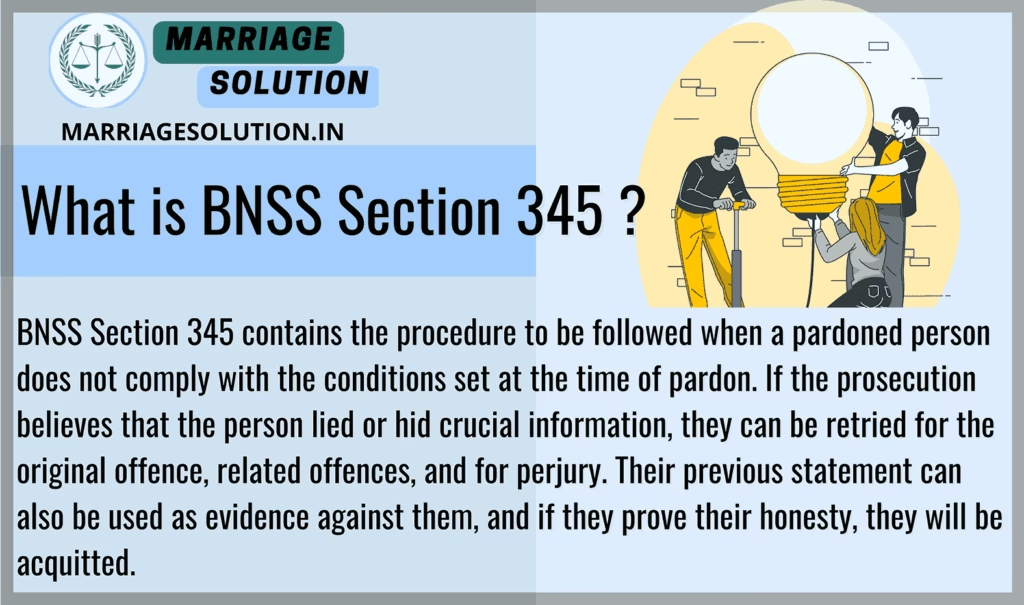
What is BNSS Section 345 ?
BNSS Section 345 contains the procedure to be followed when a pardoned person does not comply with the conditions set at the time of pardon. If the prosecution believes that the person lied or hid crucial information, they can be retried for the original offence, related offences, and for perjury. Their previous statement can also be used as evidence against them, and if they prove their honesty, they will be acquitted.
BNSS Section of 345 in Simple Points
1. Role of Public Prosecutor in Canceling the Pardon
Under BNSS 345, the Public Prosecutor plays an important role in deciding whether the person who accepted a pardon has broken the terms. If the person lies or hides crucial facts, the prosecutor can certify that the person did not comply. This certificate becomes the base for starting a fresh trial against the person. It acts as an official confirmation that the pardon was misused. The process ensures fairness and legal responsibility.
2. Fresh Trial and Charges for Multiple Offences
If the person is found to have broken the conditions, they can be tried again for the original crime and for giving false evidence. Even if the person was earlier pardoned, that pardon becomes invalid. They may also be tried for any related offence uncovered during the investigation. However, they must not be tried along with the other accused, ensuring a fair and independent trial for that person.
3. Court’s Power to Examine Compliance
The accused gets a fair chance to claim that they did follow all conditions of the pardon. At the beginning of the trial, the court asks the person whether they believe they followed the rules. If they say yes, it becomes the prosecution’s job to prove otherwise. This maintains balance and allows the person to defend themselves legally. If the person is honest, they can be acquitted even at this stage.
4. High Court Sanction and Special Procedure
If the prosecutor wants to charge the person with giving false evidence, they must first get approval from the High Court. This condition prevents the misuse of power by ensuring a senior court checks the seriousness of the false statement. The law also requires that such a person be tried separately to protect their legal rights. These safeguards promote a fair legal process even for those accused of lying.
5. Previous Statements Can Be Used as Evidence
Any statement the person made earlier while accepting the pardon can now be used as evidence against them. Whether the statement was recorded under Section 183 or 343(4), it becomes legally valid in the fresh trial. This allows the court to judge if the person told the truth earlier or tried to mislead. It ensures consistency and avoids manipulation of the legal process.
345 BNSS Overview
BNSS Section 345 empowers the Public Prosecutor to initiate legal proceedings against any individual who breaks the conditions of a granted pardon. The accused may be retried not only for the original offence but also for giving false evidence. However, the trial must be separate from other accused and requires High Court sanction for the charge of false evidence. This section maintains judicial discipline and deters fraudulent testimonies.
BNSS Section 345 – Trial of Person Not Complying with Conditions of Pardon
1. Purpose of BNSS Section 345
BNSS Section 345 ensures that a person who accepts a pardon under Section 343 or 344 but fails to fulfill the conditions of that pardon can be brought to justice. If such a person hides important facts or gives false evidence, they lose the benefit of the pardon. The law prevents misuse of the pardon system. It holds the person accountable and allows for a new trial against them. This provision helps courts maintain fairness while using pardons as a tool for justice.
2. Certification by Public Prosecutor
Before a person can be tried for not complying with the pardon conditions, the Public Prosecutor must certify that the person either intentionally hid facts or lied under oath. This certificate is crucial—it initiates the process to cancel the pardon. Without this certification, no action can be taken. This step ensures that the prosecution has valid grounds and that the accused is not unfairly targeted without legal basis.
3. Separate Trial and High Court Sanction
The person who breaks the conditions of the pardon must not be tried together with the other accused. This keeps the trial independent and unbiased. Also, if the prosecution wants to charge the person for giving false evidence, they must first get approval from the High Court. This added requirement ensures that false evidence charges are not misused and that only serious violations of the pardon terms are punished.
4. Use of Past Statements as Evidence
Any statements made earlier by the person during pardon, whether recorded by a Magistrate under Section 183 or by a court under Section 343(4), can be used as evidence against them. These statements are crucial in proving whether the accused truly followed the conditions of the pardon. If these statements are found to be dishonest or incomplete, the court can use them to justify the cancellation of the pardon and proceed with the trial.
5. Right to Defend the Compliance
At the trial, the accused person has the right to say they did comply with the conditions of the pardon. It then becomes the responsibility of the prosecution to prove otherwise. This gives a fair opportunity to the accused to defend their actions. It upholds the principle of “innocent until proven guilty.” The court listens to both sides and examines whether the accused genuinely fulfilled their commitment made under the pardon agreement.
6. When and How Court Records the Plea
If the case is being tried in a Sessions Court, the accused is asked about their plea before the charge is read out. If it’s a Magistrate’s Court, the plea is recorded before prosecution witnesses are examined. This process ensures the accused gets a clear chance to state if they fulfilled the pardon terms. The court records this statement and uses it as a reference while conducting the rest of the trial proceedings.
7. Judgment Based on Compliance
Before giving the final judgment, the court must clearly determine whether the accused followed the pardon conditions. If it finds that the accused complied honestly, it must acquit them, even if other sections say otherwise. This shows that honesty and cooperation with the court can still lead to legal protection. The law encourages truthful testimony while making sure those who betray trust are punished.
8. Covers Multiple Offences
The person may be tried not just for the original offence but also for any related crimes revealed during the trial. Additionally, the person may be tried for false evidence, making BNSS 345 a wide-reaching section. This ensures no criminal act is left unpunished due to misuse of the pardon. It serves as a deterrent against false cooperation and ensures complete accountability.
9. Protects Integrity of Criminal Justice
BNSS Section 345 strengthens the justice system by preventing misuse of pardon deals. It maintains the seriousness of court pardons and discourages dishonesty. When a person accepts a pardon, they make a promise to tell the truth. If they break it, this section ensures there are legal consequences. It upholds trust between the court and the witness, which is essential for delivering justice in complex criminal cases.
10. Complements Sections 343 and 344
This section works together with BNSS 343 (pardon during inquiry or investigation) and BNSS 344 (pardon during trial). If a person receives a pardon under either of those sections but misuses it, BNSS 345 activates the process to take them to trial again. Together, these sections form a strong mechanism to encourage truthful disclosure while also punishing betrayal of legal promises made to the court.
Example 1: A person is granted pardon under BNSS 343 and agrees to testify against a criminal group. Later, it is discovered that they deliberately left out names of some key accused. The Public Prosecutor certifies this violation, and the court initiates a fresh trial under Section 345.
Example 2: During trial, a person who accepted pardon under BNSS 344 gives false testimony under oath. With the High Court’s sanction, they are prosecuted for perjury and also retried for the original offence.
BNSS Section 345 Short Information
| Point | Details |
|---|---|
| Section Name | BNSS Section 345 |
| Role of Public Prosecutor | Prosecutor certifies that the pardoned person broke conditions by lying or hiding facts, enabling fresh trial. |
| Fresh Trial Rules | Person may be retried for the original offence, false evidence, or related crimes, but separately from other accused. |
| Court’s Compliance Check | Court asks if the person fulfilled pardon terms; prosecution must prove violation if the person claims compliance. |
| Statements as Evidence | Past statements recorded under Sections 183 or 343(4) can be used against the person in the fresh trial. |
Why is BNSS Section 345 Needed?
BNSS Section 345 is necessary to protect the integrity of the criminal justice system. When someone is given a pardon, it is based on the trust that they will help the court by telling the full truth. However, if that trust is broken, there must be a strong legal way to take action. Without such a section, criminals could misuse the system to escape punishment. BNSS 345 acts as a deterrent against false cooperation, ensures honesty, and gives courts the power to retry the person, preserving justice and accountability.
BNSS Section 345 FAQs
BNSS 345
Conclusion
BNSS Section 345 ensures that pardons given under Sections 343 or 344 are not misused. If a pardoned accomplice lies or hides facts, the Public Prosecutor can certify the violation, leading to a fresh and separate trial. Their earlier statements become evidence, and High Court sanction is required for false-evidence charges. This section protects the integrity of the pardon system and promotes truthful cooperation in serious cases.
Need Legal Support?
If you are dealing with court cases, marriage problems, or any other legal issue, our team at Marriage Solution – Lawyer Help is here for you. Simply fill out our quick online enquiry form, and we’ll connect you with the right legal expert to support your needs .
Finished with BNSS Section 345 ? Continue reading the next sections of the Bharatiya Nagarik Suraksha Sanhita (BNSS), 2023. Each section is explained in easy words, with simple examples, so anyone can understand it clearly.
- Section 346 BNSS : Rules on Postponing and Adjourning Trials .
- Section 347 BNSS : Local inspection .
- Section 348 BNSS : Power of Court to Summon or Re-Examine Witnesses.
- Section 349 BNSS : Magistrate’s Power to Order Specimen Samples .
Full BNSS Section List: https://marriagesolution.in/bnss_section-list/
Full BNS Section List: https://marriagesolution.in/bharatiya-nyaya-sanhita-section-list/
Full IPC Section List: https://marriagesolution.in/ipc-section-list
All Indian Law & Blogs: https://marriagesolution.in/indian-law/
Need Legal Help? Speak to an Experienced Lawyer Now.
Right to Information RTI act :Your Comprehensive Guide (Part 1)
The Right to Information (RTI) Act : Explore the essence of the Right to Information (RTI) Act through this symbolic image. The image features legal documents, emphasizing the importance of transparency and accountability in governance. The scales of justice represent…

What is Article 371 of Indian Constitution ?
Article 371 of the Indian Constitution grants special provisions to specific states and regions within India, addressing their unique historical, social, and cultural circumstances. These provisions aim to accommodate diverse needs and protect cultural identities within the constitutional framework.
Indian Labour law : Your Comprehensive Guide (Part 1)
The purpose of labour laws is to safeguard employees and guarantee equitable treatment at the workplace, encompassing aspects such as remuneration, security, and perks. These regulations establish a secure ambiance by imposing minimum wage requirements, ensuring factory safety measures are…
GST :Your Comprehensive Guide (Part 1 – Understanding the Basics)
The Goods and Services Tax (GST) is like a big change in how we pay taxes in India. It started on July 1, 2017, and it’s here to simplify things. Before GST, we had many different taxes, and it could…