
Introduction of IPC 20
The Indian Penal Code (IPC) is the primary legal document that defines criminal offenses and penalties in India. IPC Section 20 is an important section that defines the term “Court of Justice” within the context of the IPC. This section helps clarify who is authorized to exercise judicial power in legal matters.
What is IPC Section 20 ?
The Indian Penal Code (IPC) clarifies who can make legal decisions in court cases. This includes a single judge with legal power or a group of judges working together, both acting fairly to deliver justice.
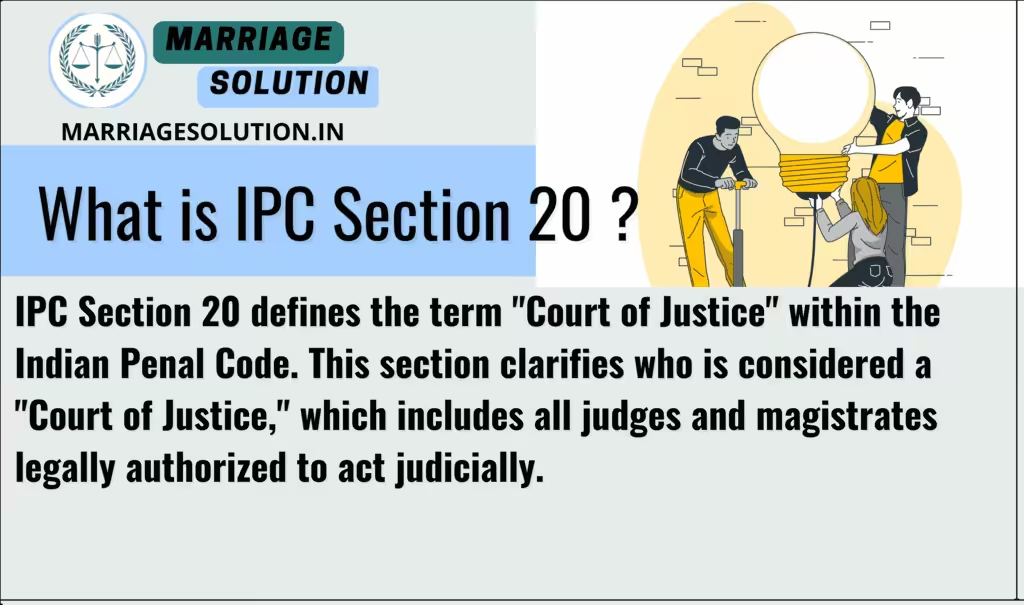
IPC Section 20 Overview
IPC Section 20 defines “Court of Justice” as any judge who is empowered by law to act judicially alone or in a body of judges in any legal proceeding. This definition is crucial for identifying the authorities responsible for administering justice in legal cases.
Key Points of IPC Section 20
Understanding IPC Section 20:
- Definition:
- IPC Section 20 defines “Court of Justice” as a judge or a body of judges authorized to act judicially.
- Legal Authority:
- This section clarifies who has the legal authority to preside over judicial matters and make legally binding decisions.
- Judicial Scope:
- Covers all individuals and bodies legally recognized as having the power to administer justice, including single judges and panels of judges.
- Role in Legal Proceedings:
- Ensures that there is no ambiguity about who is authorized to conduct judicial proceedings and deliver judgments.
- Consistency:
- Provides a uniform reference for identifying judicial authorities across different legal contexts, ensuring consistency in the application of the law.
- Relevance:
- Essential for understanding the structure and function of judicial bodies, especially in cases involving complex legal adjudication.
IPC 20 Punishment
IPC Section 20 is a definitional section and does not describe any punishable offense. Therefore, it does not prescribe any punishment or fine.
20 IPC bailable or not ?
Since IPC Section 20 does not pertain to any criminal offense, the concept of bailability is not applicable.
Section 20 IPC in short information
| Offense | Definition | Punishment | Bailable or Not |
|---|---|---|---|
| N/A | Defines “Court of Justice” as a judge or a body of judges authorized to act judicially | None (Definitional) | Not Applicable |
IPC Section 20 FAQs
Q1. What does “Court of Justice” mean under Section 20?
It means a Judge who has the power to act judicially, either alone or along with others, and is legally allowed to act as a Court.
Q2. Is every government office a “Court of Justice”?
No, only a body or person with legal power to give judicial decisions qualifies as a Court of Justice.
Q3. Why does the IPC define this term separately?
Because many offences (like giving false evidence or insulting a judge) depend on proving the act happened before a proper Court of Justice.
Need Legal Support?
If you’re facing court proceedings, marriage-related issues, or any legal matter, our team at Marriage Solution – Lawyer Help is ready to guide you. Just complete our easy online enquiry form, and we’ll connect you with the right legal assistance tailored to your needs.
Finished with IPC 20? Continue exploring the next provisions of the Indian Penal Code. Each section includes explanations, examples, and plain-language breakdowns for easy understanding.
Full IPC Section List: https://marriagesolution.in/ipc-section-list
All Indian Law & Blogs: https://marriagesolution.in/indian-law/
Full BNSS Section List: https://marriagesolution.in/bnss_section-list
Full BNS Section List: https://marriagesolution.in/bharatiya-nyaya-sanhita-section-list-pdf/