
Introduction to Section 288 BNSS
Section 288 BNSS explains how records and judgments in summary trials should be written in Indian courts. It clearly says that these records must be written in the language of the court. The High Court can also allow the Magistrate to use help from an appointed officer to prepare the record or judgment. However, the Magistrate must sign the final document for it to be legally valid. This section promotes clarity, speed, and responsibility in legal proceedings.
What is BNSS Section 288 ?
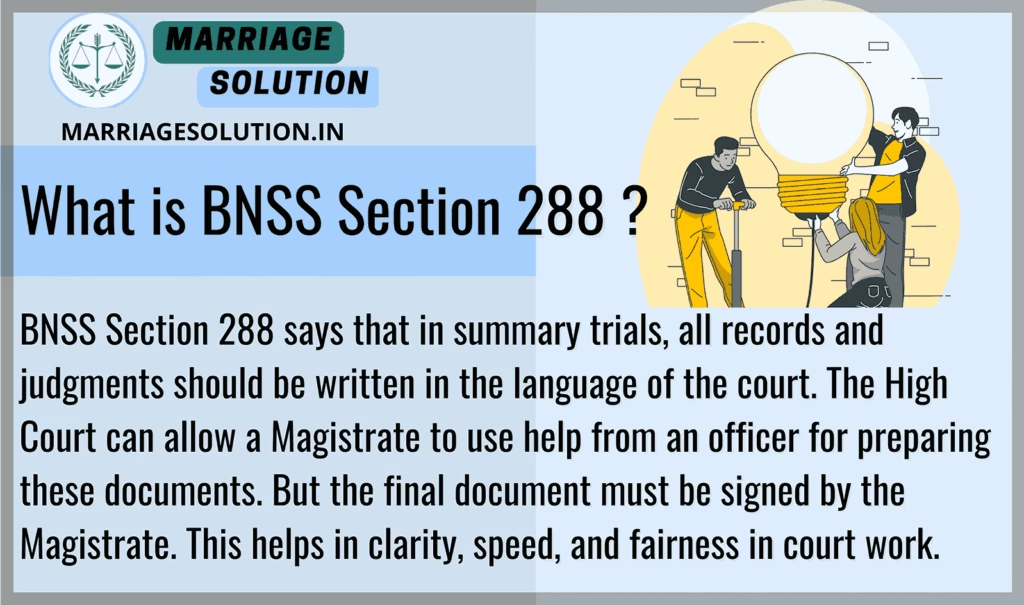
BNSS Section 288 says that in summary trials, all records and judgments should be written in the language of the court. The High Court can allow a Magistrate to use help from an officer for preparing these documents. But the final document must be signed by the Magistrate. This helps in clarity, speed, and fairness in court work.
BNSS Section of 288 in Simple Points
1) Language of Court Records and Judgments
BNSS 288 clearly says that in summary trials, the records and judgments must be written in the official language of that particular court. This means that the language used should be easy to understand by the parties involved in the case. Using the local or official language helps both the accused and others to know what has been written. It ensures clarity in the trial process. This avoids confusion for anyone reading the judgment later. It also makes the record legal and valid.
2) High Court’s Authority to Appoint Officers
The High Court is given the power to authorize any Magistrate to use help from a specially appointed officer to write the record or judgment. This officer is appointed by the Chief Judicial Magistrate (CJM). The officer can help prepare the document, but the Magistrate must carefully review and approve it. This saves time and helps handle the court’s workload better. Even though an officer may write it, the Magistrate is fully responsible for what is written.
3) Magistrate’s Signature is Mandatory
BNSS 288 makes it compulsory that the Magistrate signs the final document. Even if the writing is done by an appointed officer, without the Magistrate’s signature, the record or judgment will not be legally accepted. This rule keeps the responsibility on the Magistrate to check for mistakes or errors. Signing the document shows that the Magistrate agrees with what’s written. It keeps the trial process fair and trustworthy.
4) Faster and Efficient Court Procedure
Allowing Magistrates to take help from authorized officers for writing judgments speeds up the process of summary trials. Courts deal with many small cases every day. BNSS 288 ensures that courts don’t get overloaded with writing work. By sharing the work, cases can be completed faster, but without compromising on the quality or fairness of the judgment. This makes the court system more efficient and citizen-friendly.
5) Clarity for Accused and Future References
When the record and judgment are written properly, it helps the accused understand the judgment clearly. It is also important because if the case goes to appeal in a higher court, the clear written record makes it easy to review the case. BNSS 288 protects the rights of the accused by ensuring judgments are not just verbal but properly documented. This builds transparency in the judicial process.
Section 288 of BNSS Overview
BNSS 288 is mainly about maintaining proper written records in summary trial cases. It ensures that the language used is easy to understand by those involved in the trial, especially the accused. The provision also allows officials to assist Magistrates in writing the judgment, making the process faster. But, accountability stays with the Magistrate because they must verify and sign the judgment. This system brings transparency to legal proceedings.
BNSS Section 288 – 10 Key Points
1: Language of the Record and Judgment
BNSS Section 288 clearly states that the record and judgment of summary trials must be written in the official language of the court. This ensures that everyone involved, including the accused and lawyers, can understand the legal documents properly. Using a common language promotes transparency and clarity. This provision avoids confusion that might arise due to different languages. It respects the linguistic diversity in India while keeping the legal process clear. Local languages are often used to ensure full understanding. This makes justice more accessible to common people.
2: Flexibility Given to High Court
BNSS 288 provides that the High Court has the power to authorize a Magistrate to have the record or judgment written by another officer. This helps reduce the workload of Magistrates who handle many cases daily. By allowing authorized officers to write the judgment, courts can work faster without compromising on correctness. However, the Magistrate is still responsible for checking and signing the judgment. This flexibility helps speed up trials while ensuring that proper responsibility is maintained.
3: Role of the Chief Judicial Magistrate
The Chief Judicial Magistrate plays a key role by appointing officers who can assist in writing judgments. These officers act under the instructions of the Chief Judicial Magistrate. This arrangement allows Magistrates to focus on core judicial work, leaving administrative tasks like recording and drafting to appointed staff. Such a system creates division of labor and improves the overall efficiency of courts. The Chief Judicial Magistrate ensures that quality and accuracy are not affected by this process.
4: Signature of the Magistrate is Mandatory
Even though the record or judgment may be written by an officer, the Magistrate’s signature is compulsory for the document to be legally valid. This ensures that the final responsibility remains with the Magistrate. Without this signature, the document would hold no legal value. This rule makes sure that the Magistrate reads and verifies the judgment before it becomes official. It keeps the process accountable and protects the interests of both the accused and the court system.
5: Helps in Proper Documentation for Appeals
Properly written judgments in the official language of the court help ensure that if the accused wants to appeal against the judgment, the higher courts can easily review the record. Without a clear and well-written judgment, appeals can get delayed or rejected. BNSS 288 helps maintain a complete and understandable record, making the legal process smooth and efficient for everyone involved. This improves the quality of justice delivered by Indian courts.
6: Addresses Linguistic Diversity of India
India is a multilingual country, and different states have different official languages. BNSS 288 takes this into account by allowing judgments to be written in the court’s official language, not just in Hindi or English. This ensures that the accused and other parties can understand the court’s decisions clearly. It promotes inclusivity and makes sure that justice is not limited by language barriers. Courts in Tamil Nadu may use Tamil, in Maharashtra may use Marathi, and so on.
7: Avoids Miscommunication in Legal Process
When judgments are written in a language not understood by the accused or their lawyer, it may create confusion and misinterpretation. BNSS 288 prevents such issues by ensuring that records are written in the language of the court familiar to all involved. This improves transparency and fairness in summary trials. When legal language is understandable, people have better trust in the justice system. Thus, BNSS 288 plays a major role in making justice easy to follow.
8: Reduces Delay in Court Procedures
By allowing the Magistrate to take help from appointed officers, BNSS 288 reduces unnecessary delays in trials. Magistrates don’t need to spend excessive time preparing written judgments. Instead, they can focus on hearing cases and making decisions. This system helps tackle the issue of pending cases in Indian courts. It brings both speed and accuracy to the legal process. Reducing delay in courts also benefits the general public, ensuring that justice is delivered quickly.
9: Promotes Efficiency and Accountability
BNSS Section 288 is an example of how Indian laws are trying to improve court efficiency while keeping accountability intact. The involvement of other officers in writing judgments allows courts to manage time better. But at the same time, the Magistrate must check and sign every record or judgment. This system ensures that no mistake or misuse takes place. It balances trust, speed, and responsibility very effectively.
10: Important for Fair and Accessible Justice
At its core, BNSS 288 ensures that justice remains accessible and understandable to the common man. By using local languages and ensuring that judgments are written and verified properly, this section makes the summary trial process clear and fair. It prevents legal documents from becoming confusing for people not familiar with complicated legal terms. In this way, BNSS 288 strengthens citizens’ trust in the Indian legal system and ensures justice for all.
Example 1:
A person is fined ₹500 for causing disturbance in public. The judgment is written in Marathi by an appointed officer, but the Magistrate signs it, making it valid under BNSS 288.
Example 2:
In a Delhi court, a Hindi judgment in a summary trial is written by a court clerk authorized by the Chief Judicial Magistrate. The Magistrate reviews and signs the document before closing the case.
Section 288 of BNSS Short Information
| No. | Key Point | Simple Explanation |
|---|---|---|
| 1 | Records in Court’s Official Language | All records and judgments in summary trials must be written in the official language of that court, ensuring clarity for the accused and parties. |
| 2 | High Court Can Authorize Assistants | The High Court may permit Magistrates to use an appointed officer to write records or judgments to reduce workload and speed up cases. |
| 3 | CJM Appoints Writing Officer | Any such officer assisting the Magistrate must be formally appointed by the Chief Judicial Magistrate. |
| 4 | Magistrate Must Sign the Record | Even if someone else writes the judgment, it becomes valid only when the Magistrate signs it after verifying accuracy. |
| 5 | Faster & Efficient Summary Trials | Allowing officers to help with writing speeds up summary trials while keeping responsibility and accountability with the Magistrate. |
BNSS Section 288 FAQs
BNSS 288
Conclusion
BNSS Section 288 ensures that summary trial records and judgments are written clearly in the court’s official language. It allows appointed officers to assist the Magistrate in writing, but the final responsibility stays with the Magistrate, who must verify and sign the document. This system speeds up summary trials while keeping transparency, accuracy, and fairness intact.
Need Legal Support?
If you are dealing with court cases, marriage problems, or any other legal issue, our team at Marriage Solution – Lawyer Help is here for you. Simply fill out our quick online enquiry form, and we’ll connect you with the right legal expert to support your needs .
Finished with BNSS Section 288 ? Continue reading the next sections of the Bharatiya Nagarik Suraksha Sanhita (BNSS), 2023. Each section is explained in easy words, with simple examples, so anyone can understand it clearly.
- Section 289 BNSS : Rules for Plea Bargaining (Application of Chapter) .
- Section 290 BNSS : Plea Bargaining Process .
- Section 291 BNSS : Guidelines for mutually satisfactory disposition.
- Section 292 BNSS : Submission of Report on Satisfactory Case Settlement to Court .
Full BNSS Section List: https://marriagesolution.in/bnss_section-list/
Full BNS Section List: https://marriagesolution.in/bharatiya-nyaya-sanhita-section-list/
Full IPC Section List: https://marriagesolution.in/ipc-section-list
All Indian Law & Blogs: https://marriagesolution.in/indian-law/
Need Legal Help? Speak to an Experienced Lawyer Now.

Court Marriage in India: Complete Process, Timeline & Inter-Caste Incentives
More couples in India are choosing court marriage over traditional ceremonies every year — whether for simplicity, personal choice, or the legal recognition it provides without the scale of a full wedding. A court marriage is like a legal love…

Right to Information RTI act :Your Comprehensive Guide (Part 1)
The Right to Information (RTI) Act : Explore the essence of the Right to Information (RTI) Act through this symbolic image. The image features legal documents, emphasizing the importance of transparency and accountability in governance. The scales of justice represent…

What is Article 371 of Indian Constitution ?
Article 371 of the Indian Constitution grants special provisions to specific states and regions within India, addressing their unique historical, social, and cultural circumstances. These provisions aim to accommodate diverse needs and protect cultural identities within the constitutional framework.
Indian Labour law : Your Comprehensive Guide (Part 1)
The purpose of labour laws is to safeguard employees and guarantee equitable treatment at the workplace, encompassing aspects such as remuneration, security, and perks. These regulations establish a secure ambiance by imposing minimum wage requirements, ensuring factory safety measures are…